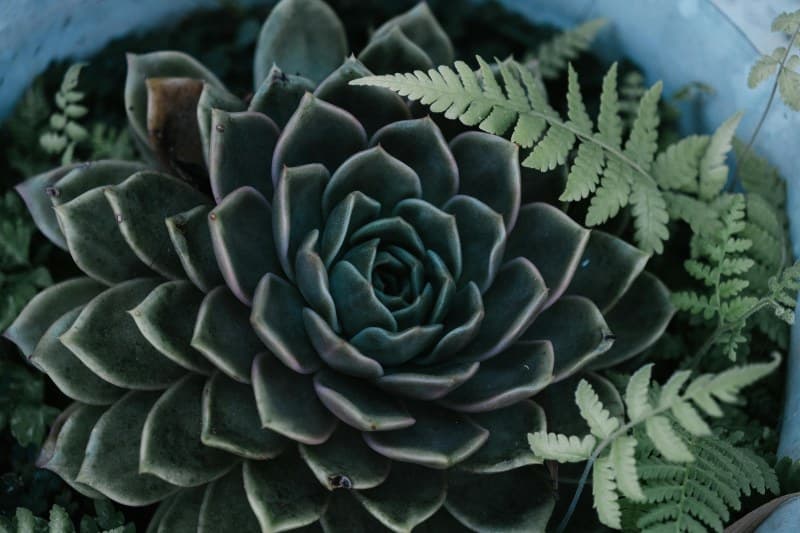
Last year, my roommate bought a tiny echeveria succulent from a local nursery. She’d heard they “need no water,” so she placed it on the kitchen windowsill and forgot about it. A month later, the leaves were shriveled and brown—she thought she had a black thumb, but the real issue was a myth she believed. Succulents are tough, but they don’t thrive on neglect.
Is it true succulents need no water? The truth
Succulents store water in their thick leaves, stems, or roots, which lets them survive dry spells. But that doesn’t mean they need zero water. Underwatering is just as harmful as overwatering: shriveled, wrinkled leaves are a clear sign your succulent is thirsty. The key is to water deeply when the soil is completely dry (usually 1-2 weeks in summer, once a month in winter).
2 Common Succulent Myths Debunked
Myth 1: Succulents love all-day direct sun
Many people think succulents need blistering sun to grow. But most varieties (like jade plants or string of pearls) prefer bright, indirect light. Too much direct sun can burn their leaves—look for brown spots or bleached patches. If your succulent is getting sunburned, move it to a spot with filtered light (like a window with a sheer curtain).
Myth 2: Any pot works for succulents
Succulents hate sitting in wet soil. Without drainage holes, excess water gets trapped at the bottom of the pot, leading to root rot. Even if you use well-draining soil, a pot without holes is a recipe for disaster. Opt for terracotta pots (they absorb excess moisture) with drainage holes to keep your succulent happy.
Succulent Care Myths vs Reality
Here’s a quick breakdown of what you should believe (and what to ignore):
| Myth | Reality | Key Takeaway |
|---|---|---|
| Succulents need no water | They need deep, infrequent water | Water when soil is dry 2 inches down |
| All-day direct sun is best | Bright indirect light is ideal | Avoid midday sun to prevent burns |
| Any pot is fine | Drainage holes are non-negotiable | Use terracotta pots for extra moisture control |
“The care of the earth is our most ancient and most worthy, and after all, our most pleasing responsibility.” — Wendell Berry
This quote reminds us that caring for succulents isn’t just about keeping them alive—it’s about understanding their needs, just like we do for any living thing. Taking the time to learn what your succulent needs will help it thrive.
A Real-Life Succulent Rescue Story
My friend Lisa had a string of pearls succulent that she kept in a cute ceramic pot without drainage. She watered it once a week, and after two months, the stems started turning mushy. She thought she was overwatering, but the real problem was the pot. She repotted it into a terracotta pot with drainage holes and adjusted her watering schedule to once every two weeks. Now her string of pearls is trailing beautifully off her bookshelf—proof that small changes make a big difference.
FAQ: Your Succulent Questions Answered
Q: How do I know if my succulent is underwatered or overwatered?
A: Underwatered succulents have shriveled, wrinkled leaves. Overwatered ones have mushy, translucent leaves or black, rotting roots. If you’re unsure, stick your finger 2 inches into the soil—dry soil means it’s time to water; wet soil means hold off.
3 Quick Tips for Happy Succulents
- 🌵 Use a well-draining mix: Combine cactus soil with perlite (1:1 ratio) to ensure water flows through easily.
- 🌵 Water deeply: When you water, pour until water comes out the drainage holes. This encourages roots to grow deeper.
- 🌵 Rotate regularly: Turn your succulent every few weeks to ensure all sides get light—this prevents lopsided growth.
Succulents are low-maintenance, but they aren’t no-maintenance. By busting these myths and giving them the right care, you can enjoy their unique beauty for years. Remember—patience and observation are your best tools for plant parenthood.