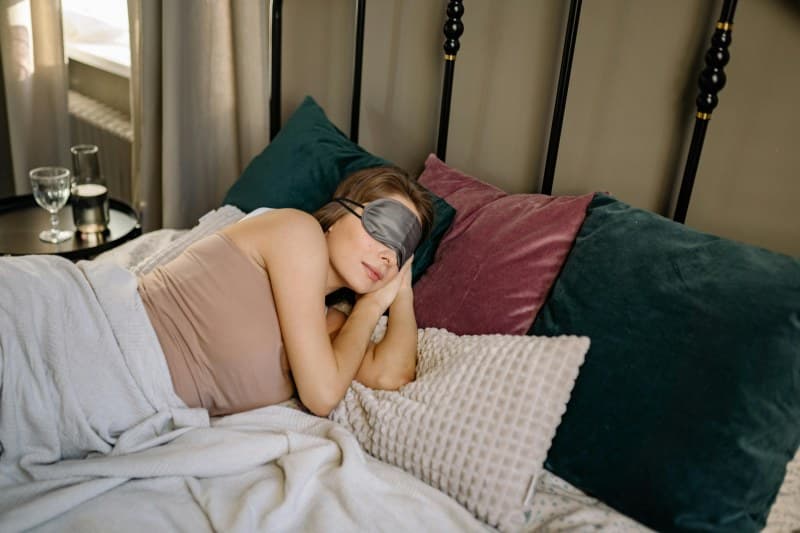
Let’s start with Sarah’s story: For years, she’d lie awake staring at the clock, panicking if she didn’t hit exactly 8 hours of sleep. She’d hit snooze 5 times in the morning, drink a glass of wine to wind down at night, and skip naps because she thought they’d ruin her bedtime. But her sleep only got worse—she was groggy all day and irritable at night. Sound familiar? Chances are, Sarah was falling for common sleep myths that sabotage rest.
The 7 Sleep Myths Holding You Back
We’ve all heard them: “8 hours is the golden rule,” “naps are bad,” “alcohol helps you sleep.” But many of these beliefs are more myth than fact. Let’s break them down, with science to back it up.
Myth vs. Fact vs. Fix: A Quick Guide
Here’s a side-by-side look at the most common sleep myths, what’s actually true, and how to adjust your habits:
| Myth | Fact | Science-Backed Fix |
|---|---|---|
| You must get 8 hours nightly. | Adults need 7-9 hours, but individual needs vary (some thrive on 7, others 9). | Track your sleep for a week to find your sweet spot—wake up without an alarm to see when your body naturally rests. |
| Hitting snooze helps you catch up. | Snoozing disrupts deep sleep cycles, leading to “sleep inertia” (that groggy feeling). | Set one alarm and place it across the room to force yourself up—no hitting snooze! |
| Alcohol improves sleep quality. | Alcohol suppresses REM sleep (the restorative stage) and causes frequent nighttime wake-ups. | Avoid alcohol 3+ hours before bed—opt for herbal tea instead. |
| Naps are bad for nighttime sleep. | Short (20-30 minute) naps before 3 PM boost energy without disrupting nighttime rest. | Stick to quick naps and skip napping after 3 PM to keep your circadian rhythm on track. |
| Counting sheep helps you fall asleep. | It’s boring but doesn’t distract the brain from racing thoughts (studies show it’s less effective than visualizing calm scenes). | Try imagining a peaceful place (like a beach or forest) to slow your mind. |
| You can train your body to need less sleep. | Chronic sleep deprivation leads to weakened immunity, mood swings, and poor focus. | Prioritize consistent sleep times (even on weekends) to keep your body’s clock steady. |
| Screen time before bed only affects kids. | Blue light from phones/laptops suppresses melatonin (the sleep hormone) in all ages. | Use blue light filters or avoid screens 1 hour before bed—read a physical book instead. |
Timeless Wisdom About Sleep
“Early to bed and early to rise makes a man healthy, wealthy, and wise.” — Benjamin Franklin
Franklin’s quote has stood the test of time, but the key takeaway isn’t rigid timing—it’s consistency. For example, if you’re a night owl who feels best going to bed at 11 PM and waking at 7 AM, that’s perfectly fine. The goal is to stick to the same schedule every day, not force an early bedtime you can’t maintain.
Real-Life Turnaround: Sarah’s Story Continued
After learning these myths, Sarah made small changes: She stopped stressing about 8 hours (she found 7.5 worked for her), set her alarm across the room, and swapped wine for chamomile tea. Within a month, she was falling asleep faster and waking up feeling refreshed. No more groggy mornings or late-night clock-staring!
Quick FAQ: Your Sleep Questions Answered
Q: Can I make up for lost sleep on weekends?
A: While weekend catch-up sleep can help reduce short-term fatigue, it disrupts your circadian rhythm. Aim for no more than 1-2 hours extra on weekends to keep your schedule consistent. Over time, this will help you sleep better every night.
Q: Is it okay to use white noise machines?
A: Yes! White noise (like fan sounds or ocean waves) can mask background noise and help you fall asleep faster. Just make sure the volume is low enough to avoid disrupting your rest.
Final Thoughts
Sleep is personal—what works for one person might not work for another. The key is to let go of myths that hold you back and listen to your body. Small, consistent changes (like ditching snooze or avoiding screens before bed) can make a huge difference in your sleep quality and overall wellness. Sweet dreams!