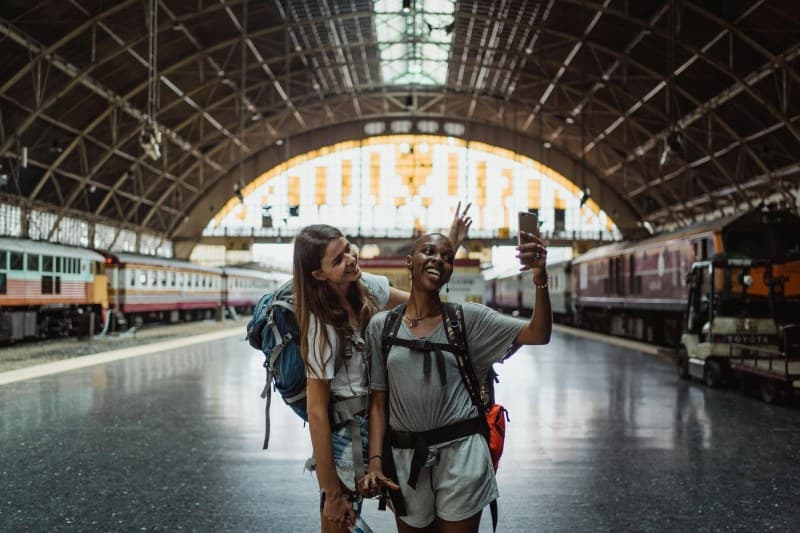
Last summer, I stood on a cliff in Amalfi, watching the sun dip below the Mediterranean. The sky was a firework of oranges and purples, but when I pulled out my phone to snap a photo, the result was… meh. The colors were washed out, the horizon was lopsided, and the shot felt nothing like the moment I’d experienced. If that sounds familiar, you’re not alone. Many travelers struggle with flat, uninspiring photos that fail to capture a place’s essence.
6 Reasons Your Travel Photos Feel Flat
1. Ignoring the Rule of Thirds
Most people center their subject (like a landmark or sunset) in the frame, which makes the photo feel static. The rule of thirds—dividing the frame into 3x3 grid lines—encourages placing key elements at the intersections, adding balance and interest.
2. Bad Lighting Timing
Midday sun casts harsh shadows and washes out colors, while low light (like at night) can make photos grainy if you don’t adjust settings. Shooting during the golden hour (one hour after sunrise or before sunset) gives soft, warm light that makes colors pop.
3. Cluttered Backgrounds
Random people, street signs, or trash cans in the background distract from your main subject. Even a beautiful landscape can feel flat if there’s too much going on behind it.
4. Lack of Depth
Photos that are all one plane (e.g., a flat beach without any foreground elements) feel two-dimensional. Adding a foreground object—like a seashell, a bench, or a local’s hand—creates depth and draws the eye into the shot.
5. Over-Editing or Under-Editing
Cranking up saturation to make colors pop often results in unnatural-looking photos. On the flip side, leaving photos as-is (especially if taken in dull light) can make them feel lifeless. Subtle edits (adjusting brightness, contrast, or warmth) are key.
6. Forgetting to Capture Context
A photo of a tall monument without any people to show its scale doesn’t tell the full story. Including context—like a tourist standing next to it or a local interacting with it—helps viewers understand the place’s size and vibe.
Fixes for Flat Travel Photos
Here’s a quick reference to address each common issue:
| Problem | Quick Fix | Example |
|---|---|---|
| Ignoring Rule of Thirds | Turn on grid lines in your camera app; place subject at intersections. | A mountain at the right third instead of center. |
| Bad Lighting | Shoot during golden hour; use HDR mode for high-contrast scenes. | A beach photo at sunrise with soft, warm light. |
| Cluttered Background | Move closer to your subject; use portrait mode to blur the background. | A street food vendor with a blurred crowd behind. |
| Lack of Depth | Add a foreground element (e.g., flower, bench) to your shot. | A temple with a stone lantern in the foreground. |
| Over/Under Editing | Use subtle edits (adjust brightness, contrast, or warmth). | A sunset photo with slightly increased saturation. |
| No Context | Include people or objects for scale. | A tall monument with a tourist standing next to it. |
Pro Tips to Elevate Your Travel Shots
Capture Movement
Add motion blur to your photos (e.g., a vendor stirring food or a crowd walking) to make them feel dynamic. Most camera apps have a “motion” or “burst” mode for this.
Experiment with Angles
Crouch down to take a photo of street art from below, or stand on a bench to get a bird’s-eye view of a market. Unusual angles make photos more memorable.
Tell a Story
Instead of just taking a photo of a coffee cup, capture the local barista making it. Stories add emotion and context to your travel photos.
Classic Wisdom on Travel Photography
“The best thing about a picture is that it never changes, even when the people in it do.” — Andy Warhol
This quote reminds us that travel photos are time capsules. Taking the time to make them vivid ensures those memories stay alive, even as years pass.
FAQ: Common Travel Photo Questions
Q: Do I need an expensive camera to take great travel photos?
A: No! Most modern smartphones have excellent cameras. The key is understanding basic composition and lighting, not the gear. For example, I took my best Amalfi photo with a phone after adjusting the grid lines and waiting for golden hour.
Next time you’re on a trip, don’t just snap a photo—take a moment to think about composition, lighting, and context. Your future self will thank you when you look back at photos that truly capture the magic of the place. Happy shooting! 📸