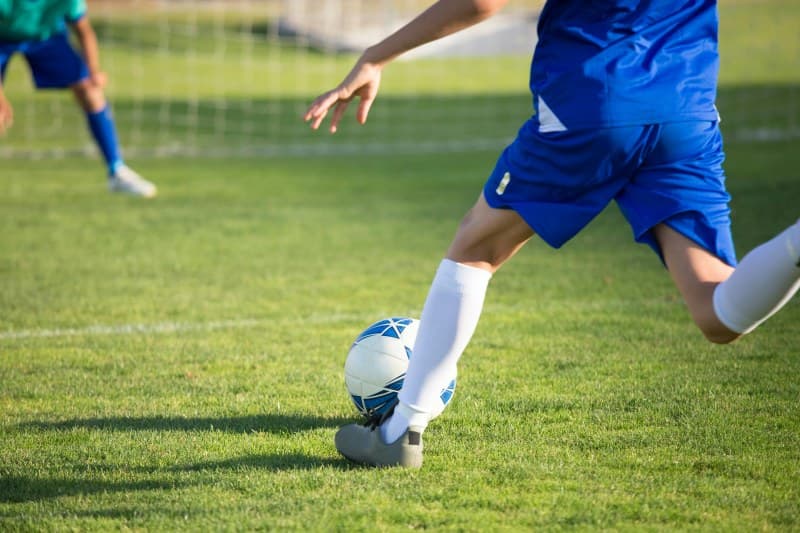
Have you ever hesitated to join a casual soccer game because you thought you’re too slow? You’re not alone. For many, soccer feels like a sport for sprinters—but that’s far from the whole story. Let’s break down the truth about speed and other common soccer myths.
The Truth About Speed in Soccer
Speed is useful in soccer, but it’s not the be-all-end-all. In casual games, what matters more is positioning (being in the right place at the right time) and decision-making (knowing when to pass or keep the ball). Even in competitive play, players like Lionel Messi—who’s not the fastest—rely on agility and ball control to outplay opponents.
5 Soccer Myths Debunked
Myth 1: You need to be fast to score goals
False! Many goals come from well-timed passes or being in the right spot. Think of a striker who waits near the goal for a cross—speed isn’t the key here; awareness is.
Myth 2: Only tall players can play defense
False! Short defenders often excel at tackling and marking because of their lower center of gravity and quick reflexes. For example, Barcelona’s Carles Puyol was 5’10” but was one of the best defenders of his time.
Myth 3: You have to dribble a lot to be good
False! Passing is more important in team play. Over-dribbling can slow down the game and lead to turnovers. Casual games are more fun when everyone gets a chance to touch the ball.
Myth 4: You need expensive gear to play
False! A basic pair of cleats (or even sneakers if you’re playing on grass) and a ball are all you need. Casual leagues don’t require fancy jerseys or equipment.
Myth 5: Soccer is only for young people
False! There are adult leagues for all ages—from 30+ to 50+—where the pace is slower and the focus is on fun. My neighbor, a 45-year-old teacher, plays every weekend and loves it.
Key Soccer Skills: Casual vs Competitive Play
Not sure which skills to focus on? Here’s a quick comparison:
| Skill | Casual Soccer Importance | Competitive Soccer Importance |
|---|---|---|
| Speed | Low (positioning beats speed) | Medium (helps in counterattacks) |
| Ball Control | Medium (basic control to pass/keep ball) | High (precision is critical) |
| Teamwork | High (keeps the game fun) | Very High (tactical advantage) |
| Positioning | High (avoids chaos) | Very High (key to strategy) |
| Decision Making | Medium (simple choices) | Very High (split-second calls) |
A Story of Slow but Smart Play
My friend Mia was always self-conscious about her speed. She avoided soccer for years until a casual league invited her to join. Turns out, she was a natural at reading the game. She’d stand in open spaces, wait for passes, and then send the ball to a teammate in a better position. By the end of the season, her team voted her “Most Valuable Player” because she made everyone else play better. Speed didn’t matter—her awareness did.
Classic Wisdom About Soccer
“Success is no accident. It is hard work, perseverance, learning, studying, sacrifice and most of all, love of what you are doing or learning to do.” — Pele
This quote sums up soccer perfectly. You don’t need to be the fastest or tallest—you just need to love the game and put in a little effort.
FAQ: Common Question About Soccer for Beginners
Q: I’ve never played soccer before—should I worry about being too slow?
A: Absolutely not! Casual leagues are designed for fun, not competition. Start by learning basic passes and positioning. You’ll find your role quickly—whether it’s passing, defending, or scoring goals. The most important thing is to enjoy yourself.
So next time someone invites you to play soccer, don’t let speed hold you back. Grab a ball, put on your sneakers, and give it a try—you might be surprised at how much you love it.