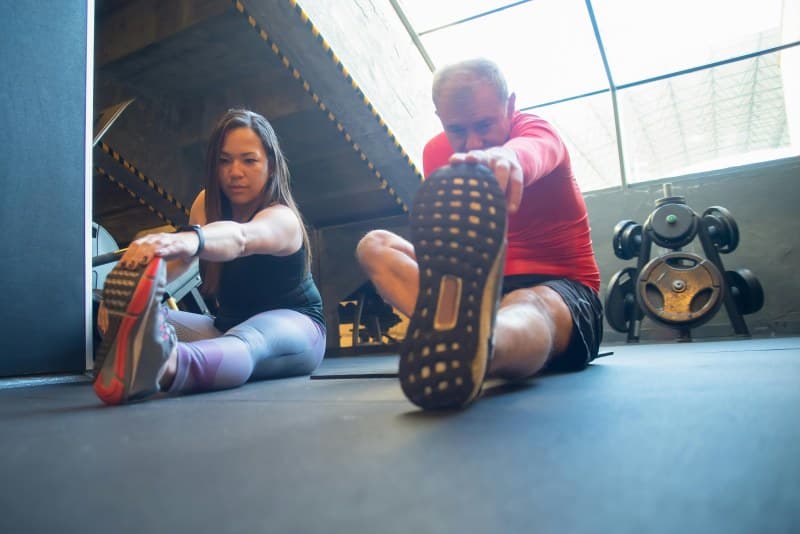
Last year, my friend Lila swore by 10 minutes of static stretches (touching her toes, holding hamstring pulls) before every run. But she still got a calf strain that kept her out for weeks. She was confused—wasn’t stretching supposed to prevent that? Turns out, she was falling for one of the most common stretching myths.
The Big Question: Does Pre-Workout Stretching Prevent Injury?
The short answer: It depends on the type of stretchingstretching. Static stretches (holding a pose) before a workout might not help—and could even hurt. Dynamic stretches (moving through a range of motion) are the ones that actually prepare your body for activity and reduce injury risk.
Dynamic vs. Static Stretching: What’s the Difference?
Let’s break down the two main types of stretching side by side:
| Type | What It Is | Best Time to Use | Key Benefits |
|---|---|---|---|
| Dynamic | Moving through a full range of motion (e.g., leg swings, arm circles, bodyweight squats) | Before workouts | Increases blood flow, improves performance, reduces injury risk |
| Static | Holding a pose for 20–30 seconds (e.g., hamstring stretches, shoulder pulls) | After workouts | Improves flexibility, reduces muscle soreness, relaxes the body |
6 Common Stretching Myths Debunked
Myth 1: Static stretching before workouts prevents injury
Truth: Studies show static stretching pre-workout can temporarily reduce muscle strength and power. For activities like running or lifting, this might increase injury risk. Stick to dynamic stretches before exercise.
Myth 2: You need to hold a stretch for 30 seconds to see benefits
Truth: Dynamic stretches only need 10–15 seconds per movement. Static stretches post-workout work best at 20–30 seconds, but even 15 seconds can help improve flexibility over time.
Myth 3: Stretching makes muscles weaker
Truth: Any temporary weakness from static stretching lasts only a few minutes. It won’t affect your workout performance if you do it post-exercise. Dynamic stretches actually boost performance.
Myth 4: Everyone needs to stretch the same way
Truth: Your stretching routine should fit your body and activity. A runner might focus on leg dynamic stretches, while a yoga practitioner might do more static stretches post-practice. Listen to your body!
Myth 5: Stretching can fix poor posture
Truth: Stretching tight muscles (like chest or hip flexors) helps, but you also need to strengthen weak muscles (like back or glutes) to improve posture. It’s a two-way street.
Myth 6: If it hurts, you’re doing it right
Truth: Stretching should feel like mild tension, not sharp pain. Pain is a warning sign—you might be overstretching or using the wrong form. Stop immediately if you feel pain.
Classic Wisdom on Movement
“Movement is life.” — Joseph Pilates
Pilates’ words remind us that stretching isn’t just about holding poses—it’s about preparing our bodies for the movement that keeps us healthy. Whether you’re running, lifting, or just walking, stretching helps keep your body flexible and strong.
FAQ: Your Stretching Questions Answered
Q: What’s the best way to stretch before a HIIT workout?
A: Opt for dynamic stretches like leg swings, high knees, or arm circles. These get your blood flowing and joints moving, preparing your body for the quick, explosive movements in HIIT. Skip static stretches pre-workout—they can reduce power output.
Practical Stretching Tips for Everyone
- Start with 5 minutes of dynamic stretches before any workout.
- Save static stretches for after your workout to cool down and improve flexibility.
- Stretch daily—even 5 minutes a day can make a big difference in your flexibility and posture.
- Don’t rush: Take your time with each stretch, and focus on your breath.
Stretching doesn’t have to be complicated. By ditching the myths and focusing on the right type of stretch at the right time, you can keep your body healthy and injury-free.