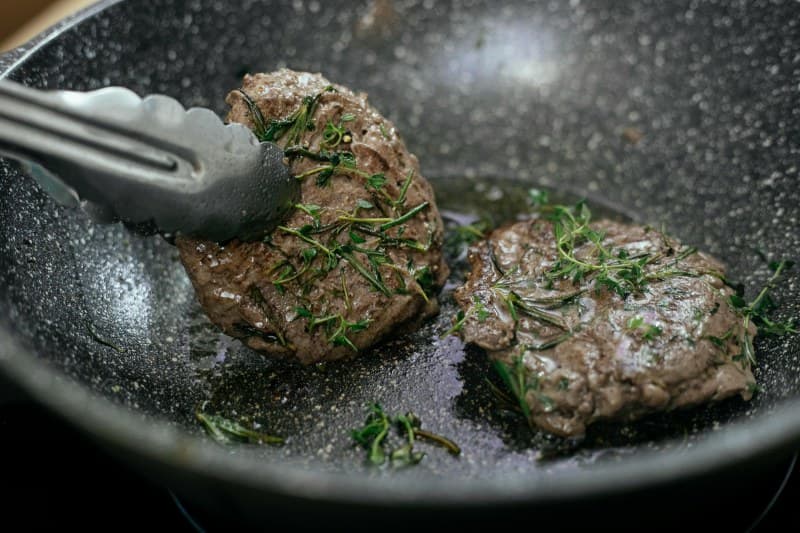
We’ve all heard it: to get a juicy steak, you have to sear it on high heat to “lock in the juices.” But is that really true? Let’s start with a story: My friend Mike, an avid home cook, swore by this rule. He’d crank his pan to the highest setting, sear his steak for 5 minutes per side, and then wonder why it came out dry. Turns out, he was falling for one of the oldest meat-cooking myths around.
The Truth About Searing & Juiciness
Searing meat does not lock in juices. Research by food scientists shows that searing actually causes a small amount of juice to escape—about 10-15% more than if you didn’t sear. So why do people do it? Because searing creates the Maillard reaction—a chemical process that browns the surface of the meat, adding deep, savory flavors we all love. It’s about taste, not juice retention.
6 Common Meat-Cooking Myths Debunked 🍖
- Myth 1: You should wash meat before cooking.
Washing meat increases the risk of cross-contamination, spreading bacteria like Salmonella to your sink, counter, and other foods. Cook meat to the right temperature instead. - Myth 2: Medium-rare is unsafe for all meats.
This is false for whole cuts like steak or roast. The USDA recommends cooking whole cuts to 145°F (63°C) with a 3-minute rest, which is medium-rare. Ground meat, however, should be cooked to 160°F (71°C) to kill bacteria. - Myth 3: Marinating tenderizes meat deeply.
Marinades only penetrate the top 1-2 millimeters of meat. For real tenderness, use a meat mallet or choose cuts like ribeye that are naturally tender. - Myth 4: You have to rest meat for exactly 10 minutes.
Rest time depends on the size of the meat. A small steak needs 3-5 minutes, while a large roast needs 15-20 minutes. Resting allows juices to redistribute, making the meat juicier. - Myth 5: Frozen meat should be thawed on the counter.
Thawing on the counter can lead to bacteria growth in the danger zone (40°F to 140°F). Use the fridge, cold water, or microwave instead. - Myth 6: Salt dries out meat.
Salting meat 30 minutes to an hour before cooking actually helps it retain moisture. The salt breaks down proteins, allowing the meat to hold onto more juice.
Meat Cooking Methods: A Quick Comparison
Not sure which method to use for your meat? Here’s a breakdown:
| Method | Key Effect | Best For | Juiciness Level |
|---|---|---|---|
| Searing | Creates Maillard reaction (flavor) | Steaks, chops | Medium (if followed by resting) |
| Braising | Slow-cooks in liquid, tenderizes tough cuts | Pot roast, short ribs | High |
| Roasting | Even cooking, crispy exterior | Whole chickens, roasts | Medium-high |
Classic Wisdom for Better Cooking
“Cooking is at once child's play and adult joy. And cooking done with care is an act of love.” — Julia Child
This quote reminds us that knowing the truth behind cooking myths isn’t just about making better food—it’s about showing care for the people we cook for. When we skip unnecessary steps (like over-searing) and focus on what really works, we create meals that are both delicious and heartfelt.
FAQ: Your Meat-Cooking Questions Answered
Q: If searing doesn’t lock in juices, why bother doing it?
A: Searing adds irreplaceable flavor. The Maillard reaction gives meat that golden-brown crust and rich taste we crave. For juicy meat, sear briefly, then finish cooking at a lower temperature (like in the oven) and rest it.
Q: Can I cook frozen meat directly without thawing?
A: Yes! For cuts like steak or chicken breasts, you can cook them from frozen. Just add a few extra minutes to the cooking time and make sure to reach the safe internal temperature.
By debunking these myths, you can cook meat with confidence—knowing you’re using science and wisdom to create the best possible meal. Happy cooking! 🍳