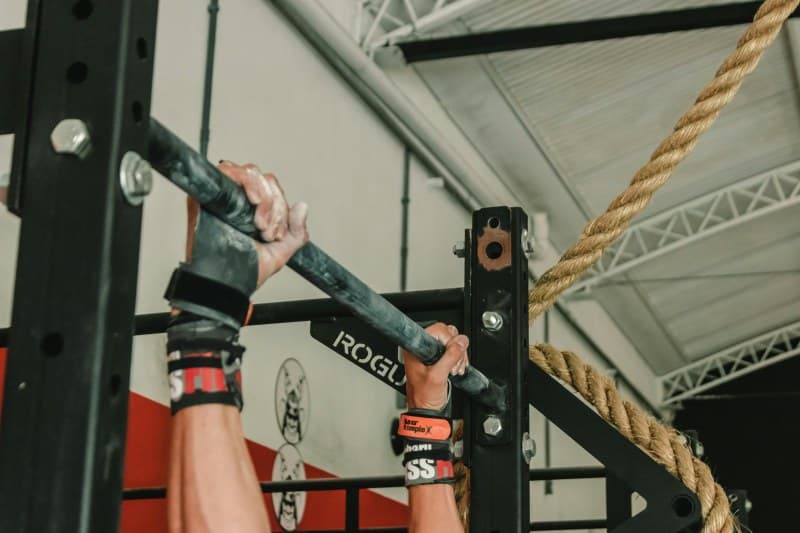
Last month, my friend Mia walked into a CrossFit gym for the first time. She saw someone doing handstand push-ups, another swinging a kettlebell, and a group sprinting across the floor. “Is this just random exercises thrown together?” she asked me later. The answer? Far from it. CrossFit workouts are carefully designed to build all-around fitness, and they follow seven core principles that make them effective.
What Makes CrossFit Workouts Unique?
CrossFit isn’t just a workout—it’s a philosophy of fitness that focuses on being ready for any physical challenge. The workouts (called WODs, or “Workouts of the Day”) are designed to improve strength, endurance, flexibility, and coordination all at once. But how exactly are they structured?
7 Key Principles of CrossFit Workout Design
Every CrossFit WOD is built around these seven principles. Here’s how they work together:
| Principle | Purpose | Example |
|---|---|---|
| Constant Variance | Prevent boredom and adaptability to different tasks | Switching between squats, pull-ups, and rowing in a single WOD |
| Functional Movements | Use movements that mimic real-life activities (e.g., lifting, carrying) | Deadlifts (lifting heavy objects from the ground) or box jumps (climbing onto a surface) |
| Intensity | Push your limits safely to maximize results | Doing as many reps as possible in 10 minutes (AMRAP) |
| Scalability | Adjust workouts for any fitness level | Replacing pull-ups with band-assisted pull-ups for beginners |
| Modality Mix | Combine different types of exercise (weightlifting, cardio, gymnastics) | A WOD with weightlifting (snatches), cardio (running), and gymnastics (handstand walks) |
| Time Domain | Use different time frames to target different energy systems | A 20-minute AMRAP (aerobic) vs. a 1-minute max effort (anaerobic) |
| Recovery Integration | Include rest days or lighter workouts to prevent injury | Active recovery days with yoga or walking instead of intense WODs |
Common CrossFit Myths Debunked
CrossFit gets a lot of flak, but many myths are just not true:
- Myth 1: CrossFit is only for elite athletes. Nope! Workouts are scaled to your level. A beginner can do knee push-ups instead of full push-ups, or use a lighter kettlebell.
- Myth 2: CrossFit causes more injuries than other workouts. Studies show injury rates are similar to other fitness programs—if you follow proper form and listen to your coach.
“Fitness is work capacity across broad time and modal domains.” — Greg Glassman, CrossFit Founder
This quote sums up CrossFit’s core idea: being fit means you can handle any physical task, whether it’s lifting a heavy box or running a mile. The seven principles above are designed to build exactly that.
Beginner’s Q&A: Your CrossFit Questions Answered
Q: Do I need to buy expensive gear to start CrossFit?
A: No! Most gyms provide all the equipment you need (kettlebells, barbells, boxes). You just need comfortable workout clothes and supportive shoes.
5 Tips to Start CrossFit Confidently
- Find a gym with certified coaches who prioritize form over speed.
- Start with a “foundation” class to learn basic movements like squats and deadlifts.
- Don’t compare yourself to others—everyone starts somewhere!
- Track your progress (e.g., how many reps you do or how fast you finish a WOD) to see improvements.
- Rest when you need to—overtraining can lead to injury.
Mia went back to the gym after learning these principles, and now she loves her WODs. She says the key was realizing the workouts are tailored to her, not just the pros. If you’re curious about CrossFit, give it a try—you might be surprised at what you can do!