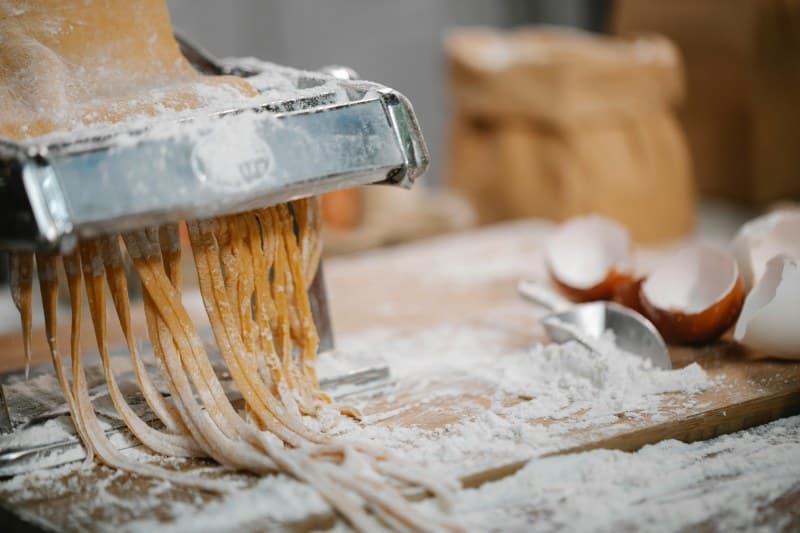
Last weekend, I tried making fresh pasta for the first time without a machine—just flour, eggs, and a rolling pin. My roommate, who swears by store-bought, took one bite and said, ‘Wait, this tastes like… sunshine?’ That’s the magic of homemade pasta: it’s not just food, it’s a flavor experience you can’t get from a box. Let’s break down why that is.
The 2 Key Taste Differences Explained 🍝
1. Freshness of Ingredients
Store-bought dried pasta often includes preservatives and shelf-stable ingredients that lose their natural flavor over time. Homemade pasta uses just a few fresh components—usually flour and eggs—with no additives. For example, using farm-fresh eggs adds a rich, creamy undertone that dried pasta can’t replicate. The flour’s natural sweetness also shines through, making each bite feel more vibrant.
2. Texture and Al Dente Potential
Homemade pasta has a chewier, more elastic texture. Its porous surface holds onto sauces better, so every strand gets coated evenly. Store-bought dried pasta can be hit or miss: too hard if undercooked, mushy if overcooked. Homemade pasta, though, hits that perfect al dente sweet spot easily—just 2-3 minutes in boiling water.
Let’s put these differences side by side to see which fits your needs:
| Aspect | Homemade Pasta | Store-Bought Dried Pasta |
|---|---|---|
| Taste | Rich, fresh, egg-forward | Neutral, mild |
| Texture | Chewy, elastic, sauce-absorbent | Stiffer, less porous |
| Prep Time | 30–45 minutes (including resting) | 5 minutes (unboxing) |
| Cost | Low (flour + eggs) | Affordable, but adds up over time |
| Shelf Life | 1–2 days (refrigerated) or 1 month (frozen) | 6+ months (pantry) |
“You don’t have to cook fancy or complicated masterpieces—just good food from fresh ingredients.” — Julia Child
Julia Child’s words ring true here. Homemade pasta doesn’t require fancy tools; it just needs fresh, simple ingredients to shine. I remember my grandma making pasta every Sunday. She’d mix flour and eggs on her wooden counter, knead until the dough was smooth, then roll it out with an old-fashioned pin. We’d all help cut it into fettuccine. The smell of garlic and tomato sauce mixing with the fresh pasta? It’s a memory I carry with me. When I made it last week, that same warmth came through—my roommate’s reaction was just like mine as a kid: pure joy.
Quick Tips for Beginners (No Machine Needed!) 💡
- Use 2 cups of all-purpose flour + 3 large eggs (room temperature) for a basic dough.
- Knead the dough for 10 minutes until it’s soft and elastic (it should spring back when poked).
- Rest the dough for 20 minutes (this relaxes the gluten, making rolling easier).
- Roll it out thin with a pin, then cut into strips with a knife (dust with flour to prevent sticking).
FAQ: Your Pasta Questions Answered 🤔
Q: Do I need a pasta machine to make good homemade pasta?
A: No! A rolling pin and knife work just fine. The machine makes it faster, but hand-rolled pasta has a unique, rustic texture that’s worth the effort.
Q: Can I freeze homemade pasta?
A: Yes! After cutting, lay the pasta on a baking sheet (dust with flour) and freeze for 1 hour. Then transfer to a bag—it’ll keep for up to a month. Cook from frozen (add 1 minute to the boiling time).
Whether you’re a beginner or a pro, homemade pasta is a simple way to elevate your meals. It’s not about being perfect; it’s about the love and freshness you put into it. Next time you’re craving pasta, give the homemade version a try—you might just surprise yourself (and your friends!).