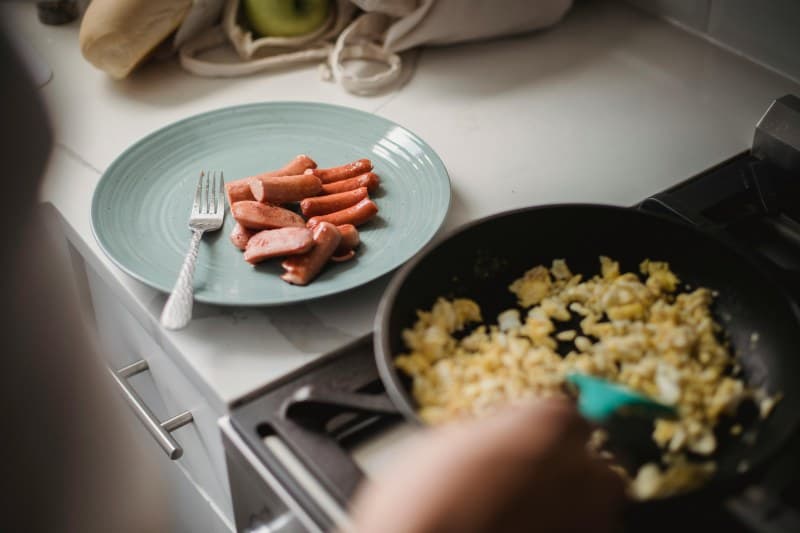
We’ve all been there: you whisk up eggs, heat the pan, and end up with either runny slop or rubbery, gray clumps that taste like nothing. Last weekend, I tried making eggs for my roommate and managed to do both—half runny, half burnt. Embarrassing? Yes. Fixable? Absolutely.
Why Your Scrambled Eggs Keep Going Wrong (And How to Fix Them)
1. Cooking on High Heat 🔥
High heat cooks eggs fast, but it also makes them seize up. The proteins in eggs coagulate too quickly, leading to a tough, rubbery texture. Fix: Swap to medium-low heat and stir constantly—this lets the eggs cook evenly without turning into a solid block.
2. Skipping the Whisk (Or Not Whisking Enough)
Whisking isn’t just for mixing; it incorporates air, which gives eggs that light, fluffy texture. If you just stir once or twice, you’ll get uneven curds. Fix: Whisk eggs for 30 seconds until they’re pale yellow and frothy—this ensures every bit is mixed and aerated.
3. Forgetting to Add Liquid (Or Adding Too Much)
Liquid (milk, water, or cream) adds moisture, preventing dryness. But too much makes them runny, and too little leaves them tough. Fix: Add 1 teaspoon of liquid per egg—this is the sweet spot for creamy, not watery, eggs.
4. Overcooking (The Most Common Sin)
Eggs keep cooking even after you take them off the heat. So if they look fully done in the pan, they’ll be overdone on the plate. Fix: Remove from heat when they’re still slightly runny—they’ll set as they cool, giving you that perfect creamy consistency.
5. Not Stirring Enough (Or Too Much)
Stirring breaks up curds. Too little: big, tough curds. Too much: tiny, mushy ones. Fix: Stir gently every 10 seconds to get soft, bite-sized curds that are neither too big nor too small.
Comparison: Common Cooking Methods for Scrambled Eggs
Let’s see how different approaches stack up:
| Method | Pros | Cons | Best For |
|---|---|---|---|
| Medium-low heat + constant stirring | Creamy, fluffy curds; even cooking | Takes longer (5-7 mins) | Weekend breakfasts or special occasions |
| High heat + quick stir | Fast (2 mins) | Rubbery, uneven texture; easy to burn | Emergency meals only |
| Adding cream vs water | Cream: Richer taste; Water: Lighter, fluffier | Cream: Higher calories; Water: Less flavor depth | Cream: Indulgent days; Water: Everyday meals |
A Classic Tip from the Pros
“The secret to perfect scrambled eggs is slow cooking and gentle stirring. Don’t rush it.” — Julia Child, Mastering the Art of French Cooking
Julia knew what she was talking about. Rushing eggs is the biggest mistake most home cooks make. Taking an extra 2 minutes to cook them slowly makes all the difference between a mediocre meal and a delicious one.
Real-Life Fix: My Friend’s Egg Transformation
My friend Sarah used to make eggs that were so rubbery, her dog wouldn’t eat them. She followed the 5 fixes: switched to medium-low heat, whisked properly, added a tsp of water per egg, stopped cooking early, and stirred gently. Now her eggs are so creamy, she posts them on Instagram every weekend. True story—she even won a office breakfast contest with her new recipe.
FAQ: Your Egg Questions Answered
Q: Should I use milk or water in scrambled eggs?
A: It depends on your preference. Milk adds richness and a slightly thicker texture, while water makes eggs lighter and fluffier. For a balance, try half milk and half water. Avoid heavy cream if you want light, everyday eggs.
Final Thoughts
Scrambled eggs are simple, but they require attention to detail. Avoid the 5 mistakes, follow the pro tips, and you’ll have perfect eggs every time. No more rubbery or runny messes—just creamy, fluffy goodness that even Julia Child would approve of.