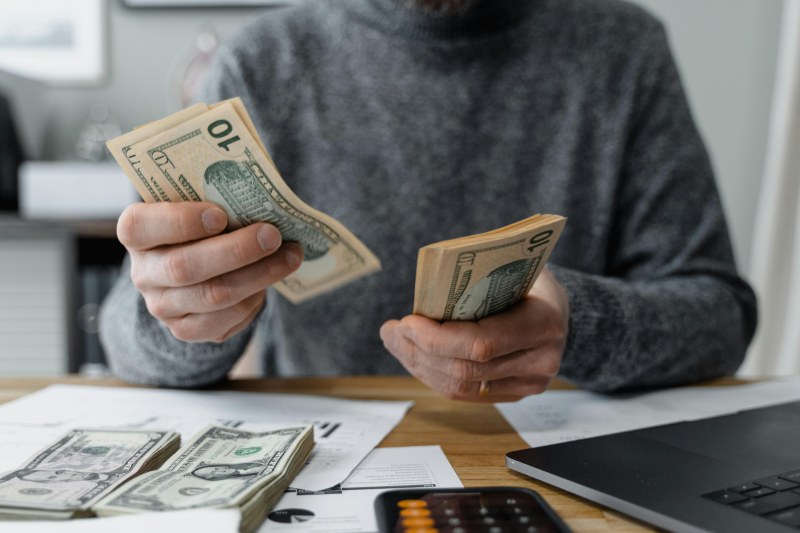
Ever grabbed a $5 latte on your way to work, thinking it’s just a small expense? Or skipped putting $10 into savings because it felt too trivial? You’re not alone. But small savings—those tiny, consistent amounts—can add up to something big, thanks to psychology and compounding. Let’s break down how this works.
4 Key Psychological Principles Behind Small Savings
Small savings stick because they align with how our brains work. Here are four core principles:
1. The "Pain of Paying" Reduction
When you save small amounts, the psychological pain of parting with money is lower than if you save a large chunk. For example, $10 a week feels easier than $40 a month, even though they’re the same. Your brain doesn’t register small sums as a big loss, making it easier to keep up.
2. Habit Formation Through Consistency
Small, daily or weekly savings turn into habits. According to behavioral science, repeating an action for 21–66 days makes it automatic. So if you save $5 every time you get paid, it becomes second nature.
3. The "Progress Effect"
Seeing your savings grow—even a little—boosts motivation. Apps that show your balance increasing daily give you a sense of achievement, pushing you to keep going.
4. Compounding Magic (Psychological & Financial)
Financially, compound interest makes small amounts grow over time. Psychologically, the excitement of watching your money multiply keeps you engaged. A $10 weekly save at 5% annual interest becomes over $5,500 in 10 years—way more than the $5,200 you put in.
Common Myths About Small Savings (Debunked)
Let’s set the record straight on four common myths:
| Myth | Reality |
|---|---|
| Small savings don’t add up to anything meaningful. | A $5 daily save adds up to $1,825 a year—enough for a vacation or emergency fund. |
| I need to earn more to save. | Even minimum-wage earners can save $10 a week—consistency beats income size. |
| Saving small means I have to give up all fun. | You can save $5 a day and still treat yourself occasionally—balance is key. |
| Compound interest only helps the rich. | Compound interest works for everyone—starting early (even with small amounts) is more important than starting with a lot. |
Actionable Tips to Start Small Savings
Ready to start? Try these tips:
- 💡 Automate it: Set up a recurring transfer of $5–$10 from your checking to savings every payday.
- 💡 Round up purchases: Use apps that round up your debit card purchases to the nearest dollar and save the difference.
- 💡 Save windfalls: Put 10% of unexpected money (like a bonus or gift) into savings instead of spending it all.
- 💡 Track progress: Use a spreadsheet or app to see your savings grow—this keeps you motivated.
Real-Life Example: Sarah’s Latte Savings
Sarah, a 28-year-old teacher, used to buy a $5 latte every weekday. She decided to cut back to one latte a week and save the other $20. After a year, she had $1,040. She put that into a high-yield savings account with 4% interest. Five years later, her savings grew to over $1,250—without her adding any more money. That’s the power of small savings plus compounding.
"Little drops of water make the mighty ocean; little grains of sand make the pleasant land." — Unknown Proverb
This proverb sums it up perfectly: small, consistent actions lead to big results. Whether it’s a few dollars a day or a percentage of your paycheck, every bit counts.
FAQ: Your Small Savings Questions Answered
Q: I’m living paycheck to paycheck—how can I save even a little?
A: Start with $1 a day. It’s only $30 a month, but it builds the habit. Over time, you can increase the amount as you find ways to cut small expenses (like skipping one takeout meal a week).
Small savings aren’t about being perfect—they’re about being consistent. By understanding the psychology behind it and debunking myths, you can turn tiny amounts into a meaningful nest egg.