Let’s start with Sarah: she tried saving $500 a month for three straight months, and each time she ended up dipping into the fund for unexpected bills or a spontaneous coffee run. By month four, she’d given up, telling herself, “I’m just terrible at saving.” Sound familiar?
Why the 'I’m terrible at saving' feeling sticks
That self-critical voice doesn’t come out of nowhere. Three key factors keep it alive:
- Past failures: Like Sarah’s missed $500 goals, previous attempts that didn’t work make us believe we’re incapable.
- Comparison trap: Seeing friends post about their big emergency funds or vacation savings on social media makes our small efforts feel worthless.
- All-or-nothing thinking: If we can’t save a “big enough” amount, we skip saving entirely—reinforcing the idea we’re bad at it.
2 Practical Ways to Shift Your Saving Mindset
1. Ditch “Perfect” for “Progress”
Instead of aiming for a lofty monthly goal, start tiny. Sarah swapped her $500 target for $50 a month. When she hit that, she celebrated—even bought herself a small treat (without guilt!). Over time, she increased it to $100, then $150. The key? Focusing on consistent small wins instead of perfect, big ones.
2. Embrace No-Judgment Micro-Savings
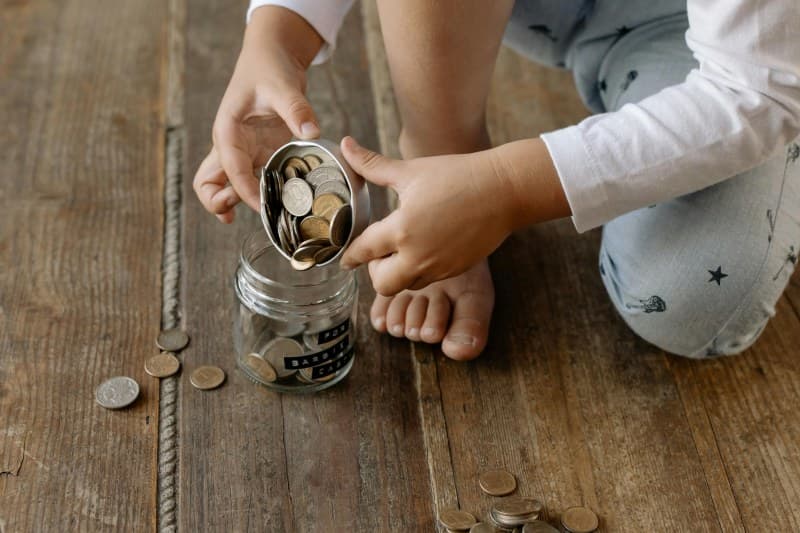
Micro-savings are all about putting aside whatever you can, no matter how small. Sarah started using a jar labeled “No Questions Asked” where she dropped loose change, $1 bills, or even $5 here and there. At the end of the month, she’d deposit it into her savings account. She didn’t beat herself up if she only put in $20 that month—she just kept going.
Let’s compare how these strategies change your approach:
| Strategy | Old Mindset | New Mindset |
|---|---|---|
| Progress Over Perfection | “If I can’t save $500, why bother?” | “Saving $50 this month is a win—I’ll build from here.” |
| No-Judgment Micro-Savings | “$1 is too small to matter.” | “Every dollar adds up over time.” |
“Small drops of water make a mighty ocean.” — Proverb
This old saying perfectly sums up micro-savings. Even the tiniest contributions grow into something meaningful if you keep at it. Sarah’s jar saved her $320 in six months—enough for a new laptop charger and a small emergency fund.
Common Question: What if I Slip Up?
Q: I saved $100 this month, but then I spent $50 on a last-minute gift. Does that mean I’m still bad at saving?
A: No! Slipping up is normal. The difference between “terrible at saving” and “learning to save” is how you bounce back. Instead of quitting, just start again next month. Sarah once spent $70 from her savings on a concert ticket—she didn’t beat herself up; she just put an extra $10 into her jar the next week to make up for it.
At the end of the day, saving isn’t about being perfect. It’s about building a habit that works for you. Whether you’re putting aside $5 a week or $50 a month, you’re already doing better than the person who’s not trying at all. So next time that self-critical voice pops up, tell it: “I’m not terrible at saving—I’m learning to save, one step at a time.”