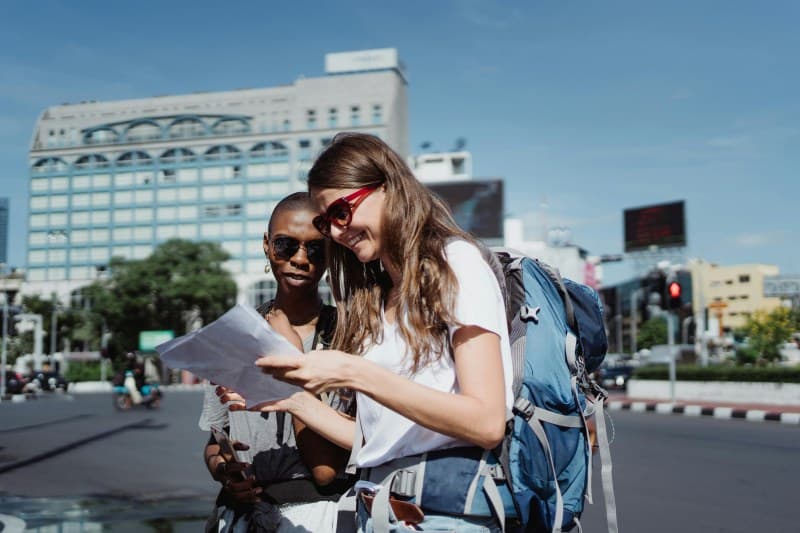
Last summer, I found myself circling the same cobblestone street in Lisbon, my phone dead and a crumpled map in my hand. I’d passed the pastel de nata shop three times, each time hoping the next turn would lead to my Airbnb. Then an elderly lady selling oranges gestured to me, pointed down a narrow alley, and said something in Portuguese I didn’t understand. Follow her finger, I thought—and sure enough, the alley opened to a quiet square where my rental was hidden. That day, I learned getting lost isn’t a failure; it’s a chance to connect with the place (and its people) in a way GPS never could.
Why Do We Get Lost in New Cities?
Getting lost in a new city isn’t just about bad directions. It’s a mix of cognitive overload (your brain is processing too many new sights, sounds, and smells at once), lack of familiar landmarks (that coffee shop you pass every morning at home isn’t here), and over-reliance on digital tools (GPS can die, lose signal, or lead you down one-way streets). Even the most seasoned travelers can feel disoriented—especially in cities with winding streets or no grid system (looking at you, Paris).
7 Ways to Navigate Like a Local
Want to stop feeling like a lost tourist? Try these tips:
- Learn the lay of the land first: Spend 10 minutes before you leave your hotel looking at a map. Note major landmarks (rivers, parks, big buildings) so you have a mental framework.
- Follow local commuters: If you’re trying to find a subway station or bus stop, watch where locals go. They know the fastest routes and which entrances to use.
- Use landmarks instead of addresses: Locals often give directions using landmarks (e.g., “turn right at the blue mosque” or “walk past the market until you see the clock tower”). This is way more reliable than street names in old cities.
- Ask small business owners: Café baristas, shopkeepers, and street vendors know their neighborhood inside out. They’ll give you honest, practical directions (and maybe even a recommendation for a hidden spot).
- Carry a paper map as backup: Phones die, batteries run out, and signal drops. A foldable map is lightweight and never fails.
- Walk with purpose: Even if you’re unsure where you’re going, walk like you know. Confidence makes people more likely to help if you need it (and less likely to target you as a tourist).
- Embrace the detour: Some of the best travel memories come from getting lost. I once stumbled on a street art festival in Berlin after taking a wrong turn—something I never would have found if I’d stuck to my plan.
Navigation Method Showdown: Which Works Best?
Not sure which navigation method to use? Here’s a quick comparison:
| Method | Pros | Cons | Best For |
|---|---|---|---|
| Digital Maps (Google Maps) | Real-time directions, traffic updates, public transit info | Battery drain, signal issues, can be distracting | Short trips, public transit |
| Paper Map | No battery needed, gives big-picture view, easy to mark spots | Hard to fold, no real-time updates | Exploring old cities, backup |
| Local Advice | Personalized, hidden gems included, cultural insight | Language barrier, might be subjective | Finding hidden spots, getting off the beaten path |
Myth Busting: Common Navigation Misconceptions
Let’s set the record straight on two common myths:
- Myth: You need to speak the local language to ask for directions.
Fact: Gestures, showing a photo of your destination, or using a translation app (like Google Translate) works. Most locals are happy to help even if you don’t share a language. - Myth: Getting lost is a sign of bad planning.
Fact: Some of the most memorable travel moments come from detours. As the saying goes, “The best roads are the ones you didn’t plan.”
Q&A: Your Navigation Questions Answered
Q: I’m terrible at reading maps—can I still navigate well in new cities?
A: Absolutely! Stick to digital maps for short trips (use voice guidance so you don’t have to look at your phone). For longer walks, focus on landmarks (like a tall building or a river) to keep your bearings. And don’t be afraid to ask for help—locals love sharing their city with visitors.
Final Thought: Embrace the Journey
“The world is a book, and those who do not travel read only one page.” — Saint Augustine
This quote reminds us that travel is about more than reaching a destination. Getting lost, asking for directions, and discovering unexpected spots are all part of the adventure. So next time you find yourself circling a street in a new city, take a breath—you might just find something amazing.