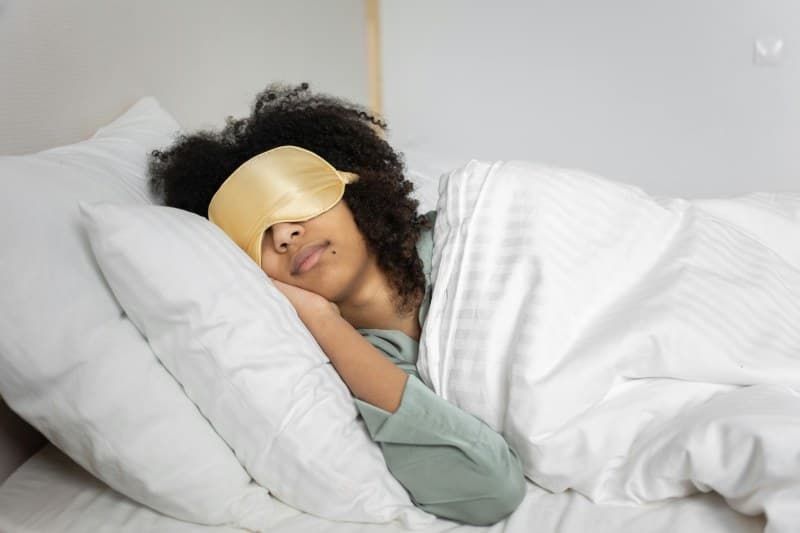
Last week, my friend Lila told me she was exhausted even after 8 hours of sleep. She’d set her alarm to hit the “recommended” number every night, but still dragged through meetings and forgot her keys. Sound familiar? We often fixate on how long we sleep, but what if the quality of that sleep matters just as much? Let’s break down four common myths that blur the line between sleep quantity and quality.
4 Myths About Sleep Quality vs. Quantity
Myth 1: 8 Hours is the Magic Number for Everyone
You’ve heard it a thousand times: “Get 8 hours of sleep.” But the truth is, individual needs vary. Teens need 8–10 hours, adults 7–9, and some people (like short sleepers) thrive on 6. For example, my neighbor, a 60-year-old retiree, sleeps 6 hours nightly and wakes up energized—because her sleep cycles are deep and uninterrupted.
Myth 2: More Sleep Always Equals Better Rest
Oversleeping (over 9 hours for adults) can lead to grogginess, known as sleep inertia. A 2021 study in the Journal of Sleep Research found that people who overslept were more likely to report daytime fatigue than those who stuck to their optimal duration. It’s not about how much you sleep—it’s about how well.
Myth 3: Deep Sleep is the Only Important Stage
All sleep stages matter. Light sleep helps your body transition between stages, deep sleep repairs tissues, and REM sleep boosts memory and creativity. Skipping any stage (like REM, which can be disrupted by alcohol) leaves you feeling unrefreshed, even if you sleep 8 hours.
Myth 4: You Can “Bank” Sleep on Weekends
Sleeping 10 hours on Saturday to make up for 5-hour worknights disrupts your circadian rhythm. This “social jetlag” makes it harder to fall asleep on Sunday and wake up on Monday. My cousin tried this for months and always felt sluggish at the start of the week—until she switched to a consistent 7-hour schedule.
Quality vs. Quantity: Key Differences
Let’s compare the two to clear up confusion:
| Aspect | Sleep Quantity | Sleep Quality |
|---|---|---|
| Definition | Total hours spent asleep | How restful and uninterrupted your sleep is |
| Key Metric | Hours per night | Time spent in deep/REM stages, number of awakenings |
| Impact on Energy | Too little leads to fatigue; too much leads to grogginess | Poor quality leads to daytime sleepiness even with enough hours |
| Example | 8 hours of sleep (regardless of stages) | 7 hours of sleep with minimal awakenings and full REM cycles |
Wisdom from the Ages
A good laugh and a long sleep are the best cures in the doctor's book. — Irish Proverb
This proverb hints at both quality (a good laugh sets the stage for restful sleep) and quantity (long sleep). It’s a reminder that balance is key—you can’t have one without the other.
FAQ: Your Sleep Questions Answered
Q: Can I improve sleep quality without changing how long I sleep?
A: Yes! Try these small changes: Keep your room dark (use blackout curtains), avoid screens 1 hour before bed (blue light suppresses melatonin), and limit caffeine after 2 PM. My friend Lila started using a white noise machine and cut her nighttime awakenings in half—now her 8 hours feel way more restorative.
Practical Tips to Balance Both
- Stick to a routine: Go to bed and wake up at the same time every day (even weekends).
- Create a sleep-friendly space: Keep your room cool (60–67°F/15–19°C) and free of clutter.
- Avoid heavy meals: Eat your last meal 2–3 hours before bed to prevent indigestion.
- Move daily: 30 minutes of walking can improve both sleep quality and quantity (just don’t exercise too close to bedtime).
At the end of the day, sleep is personal. Listen to your body—if you wake up feeling refreshed, you’re probably doing something right. And if not? Try tweaking one small thing (like your bedtime routine) and see how it affects you. Sweet dreams! 😴