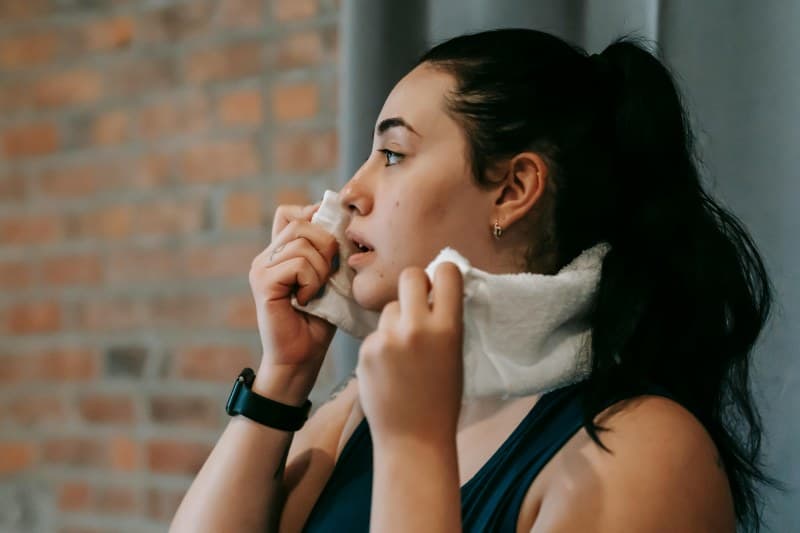
Ever left a workout feeling like you didn’t “earn” it because you didn’t drip with sweat? Or envied the person next to you who’s soaked through their shirt, thinking they must be working harder? You’re not alone. Sweat is often seen as a badge of honor in fitness, but is it really a measure of how good your workout was?
The Truth About Sweat
Sweat’s main job is simple: to cool your body down. When your muscles work, they generate heat. Your brain signals your sweat glands to release moisture, which evaporates and lowers your body temperature. How much you sweat depends on a bunch of factors—your fitness level (fitter people sweat earlier and more to cool efficiently), genetics (some people have more sweat glands), the environment (hot, humid days make everyone sweat more), and even what you ate or drank before your workout.
Two Common Myths Debunked
Myth 1: More Sweat = More Calories Burned
Let’s get this straight: Sweat doesn’t equal calorie burn. A 30-minute yoga session might burn the same calories as a 30-minute walk, but you might sweat more in yoga if the room is heated. Or you could sit in a sauna and sweat buckets without burning any extra calories. Calorie burn depends on how hard your muscles are working, not how much you sweat.
Myth 2: No Sweat = No Progress
Take my friend Mia, a beginner yoga student. She’d leave class feeling frustrated because she didn’t sweat as much as the woman next to her. She started pushing herself to hold poses longer than she should, leading to a strained shoulder. Her instructor finally told her: “Yoga is about strength and flexibility, not sweat. If your muscles feel challenged, you’re making progress.” Mia learned to focus on how her body felt instead of her shirt’s dryness—and her shoulder healed.
How to Measure Real Workout Progress
Instead of fixating on sweat, look at these more reliable metrics. Here’s a quick comparison:
| Metric | What It Tells You | Is It Reliable? |
|---|---|---|
| Sweat | Your body’s cooling response | ❌ Not for progress |
| Heart Rate | How hard your cardiovascular system is working | ✅ Yes (target zones vary by age) |
| Muscle Fatigue | Whether your muscles are being challenged | ✅ Yes (mild soreness next day is normal) |
| Post-Workout Energy | How well your body is adapting to the workout | ✅ Yes (feeling energized, not drained) |
“It’s not the size of the dog in the fight, but the fight in the dog.” — Mark Twain
This quote rings true for fitness too. The effort you put in—whether you’re lifting weights, doing yoga, or going for a run—matters more than how much you sweat. You don’t need to be soaked to make progress.
FAQ: Your Sweat Questions Answered
Q: Is it normal to sweat more during some workouts than others?
A: Absolutely! If you’re working out in a hot room, or if you’ve had a lot of water before, you’ll sweat more. Even stress or anxiety can make you sweat more during a workout. It’s all normal.
Q: Should I drink more water if I sweat a lot?
A: Yes! Sweating depletes your body’s water and electrolytes. Drink water before, during, and after your workout to stay hydrated. If you’re sweating heavily for more than an hour (like a long run), you might want to add an electrolyte drink—but only then.
Next time you finish a workout, skip the sweat check. Instead, ask yourself: Did I challenge my body? Do I feel stronger or more flexible? Those are the signs that matter.