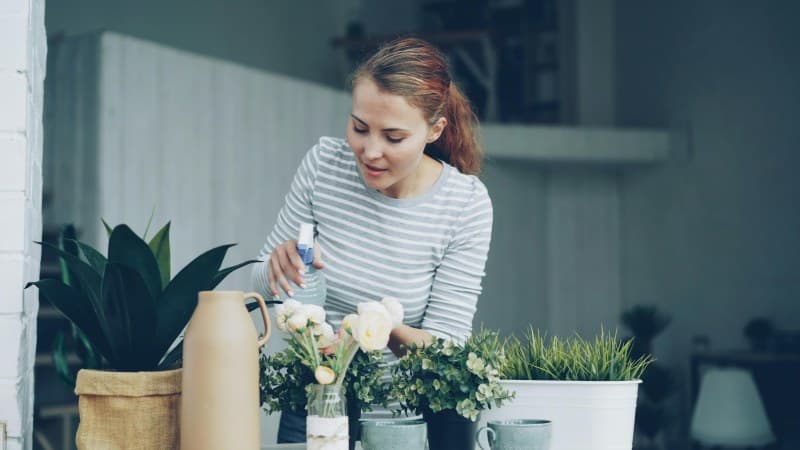
Last month, my friend Sarah proudly told me she’d set a strict Sunday watering schedule for her pothos. Two weeks later, its leaves turned yellow, and she panickedly doubled the frequency—only to find mushy roots a week after that. Sound familiar? Watering houseplants is one of the most misunderstood parts of care, and scheduling is just the tip of the iceberg.
The Truth About Watering Schedules
Here’s the hard truth: A one-size-fits-all watering schedule doesn’t exist. Your plant’s needs depend on its species (succulents vs. ferns), pot size (small pots dry faster), soil type (sandy vs. peat), and even the room’s humidity (dry AC air speeds evaporation). Scheduling might work for a while, but it’s a shortcut that often leads to over- or underwatering.
6 Common Watering Myths Debunked
Let’s break down the most persistent myths and set the record straight. Below is a quick comparison:
| Myth | Truth | Key Takeaway |
|---|---|---|
| Water every 7 days | Depends on plant and environment | Check soil moisture, not the calendar |
| Yellow leaves = underwatered | Yellow leaves often mean overwatered | Look for mushy stems (over) or crispy edges (under) |
| All plants need the same amount | Succulents need little; ferns need constant moisture | Research your plant’s specific needs |
| Water from above is bad | Most plants tolerate top-watering (avoid wetting leaves for mildew-prone types) | Water until it drains from the bottom |
| Tap water is toxic to plants | Most plants handle tap water (let it sit 24h to remove chlorine) | Use filtered water only for sensitive plants like orchids |
| More water = happier plant | Overwatering is the #1 killer of houseplants | Roots need air too—don’t drown them |
Practical Tips to Water Like a Pro
So how do you get it right? Try these simple steps:
- Finger test: Stick your finger 1-2 inches into the soil. If it’s dry, water; if damp, wait.
- Drainage first: Use pots with holes and empty saucers after watering to prevent root rot.
- Adjust for seasons: Plants need less water in winter (slower growth) and more in summer (faster evaporation).
“Watering should be done with care, not by the clock.” — Alan Chadwick, renowned organic gardener
Chadwick’s words ring true: Gardening is about observation, not rigid rules. For example, my snake plant only needs water every 3-4 weeks in winter, but in summer, it’s every 2 weeks. I check the soil each time, and it’s never let me down.
FAQ: Overwatered vs. Underwatered—How to Tell?
Q: My plant’s leaves are wilted. Is it thirsty or drowning?
A: Wilted leaves can mean both! Check the soil: If it’s soggy and the stems are mushy, it’s overwatered. If the soil is dry and leaves are crispy at the edges, it’s underwatered. For overwatered plants, let the soil dry completely before watering again; for underwatered, give a thorough soak.
Final Thoughts
Watering houseplants isn’t rocket science—it’s about paying attention. Ditch the schedule, get to know your plants, and you’ll see them thrive. Remember: A little patience goes a long way in the world of houseplants.