Last month, my friend Mia walked into the gym for the first time. She stared at the dumbbells, feeling overwhelmed—everyone around her was lifting heavy, grunting, and loading plates. She thought, ‘If I don’t lift that much, I’ll never get stronger.’ But here’s the truth: heavy weights aren’t the only way to build muscle.
The Big Myth: Heavy Weights = Muscle Growth?
For years, the fitness world has pushed the idea that lifting heavy is the only path to bigger muscles. But science tells us otherwise. The key to muscle growth is progressive overload—gradually increasing the challenge on your muscles over time. This can mean adding more weight, but it can also mean doing more reps, slowing down your movements, or using harder variations of an exercise.
Heavy vs. Light Weights: What’s the Difference? 📋
Let’s break down how heavy and light weights stack up for muscle growth:
| Aspect | Heavy Weights (8-12 reps) | Light Weights (15+ reps) |
|---|---|---|
| Muscle Fiber Activation | Targets fast-twitch fibers (strength, power) | Targets slow-twitch fibers (endurance, toning) |
| Time Commitment | Shorter sets (fewer reps) | Longer sets (more reps) |
| Injury Risk | Higher (if form is poor) | Lower (gentler on joints) |
| Suitability for Beginners | Less ideal (can be intimidating) | More ideal (easier to master form) |
7 Common Strength Training Myths Debunked
- Myth: You have to lift heavy to build muscle. Truth: Progressive overload is key—even light weights can build muscle if you increase reps or intensity.
- Myth: Rest days are lazy days. Truth: Muscles repair and grow during rest. Skipping rest leads to injury or stalled progress.
- Myth: More reps = better results. Truth: Too many reps without intensity won’t challenge your muscles. Aim for reps that make the last 2-3 feel tough.
- Myth: Bodyweight exercises can’t build muscle. Truth: Variations like one-legged squats or diamond push-ups add enough challenge to grow muscles.
- Myth: You have to work out every day. Truth: 3-4 days a week of strength training is enough for most people.
- Myth: Lifting weights makes women bulky. Truth: Women have less testosterone, so they won’t get bulky unless they train specifically for it (heavy weights + high calorie intake).
- Myth: You need a gym membership to get strong. Truth: Home workouts with resistance bands, water bottles, or bodyweight work just as well.
A Classic Quote to Remember
“Strength does not come from physical capacity. It comes from an indomitable will.” — Mahatma Gandhi
Gandhi’s words ring true for fitness too. Building muscle isn’t just about lifting heavy—it’s about showing up consistently, even when it’s hard. Mia learned this firsthand.
Real-Life Example: Mia’s Journey
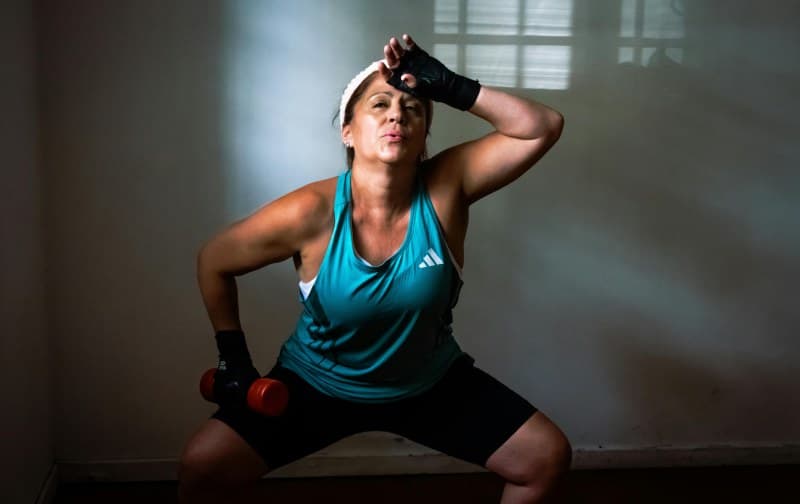
Mia decided to start small. She used 5-pound dumbbells for bicep curls and did 15 reps per set, focusing on form. After 8 weeks, she noticed her arms were firmer, and she could lift 8-pound dumbbells easily. She didn’t need to lift heavy to see progress—she just needed to keep challenging herself.
FAQ: Your Burning Questions Answered
Q: Can I build muscle without any equipment?
A: Yes! Bodyweight exercises like squats, lunges, push-ups, and planks work. To progress, try adding reps, slowing down the movement (e.g., 3 seconds to lower a push-up), or using a resistance band for extra challenge.
Final Thoughts
Strength training isn’t about lifting the heaviest weights in the room. It’s about finding what works for you, staying consistent, and challenging your body over time. So next time you’re at the gym (or home), don’t stress about the weight—focus on form and progress. You’ve got this! 💪