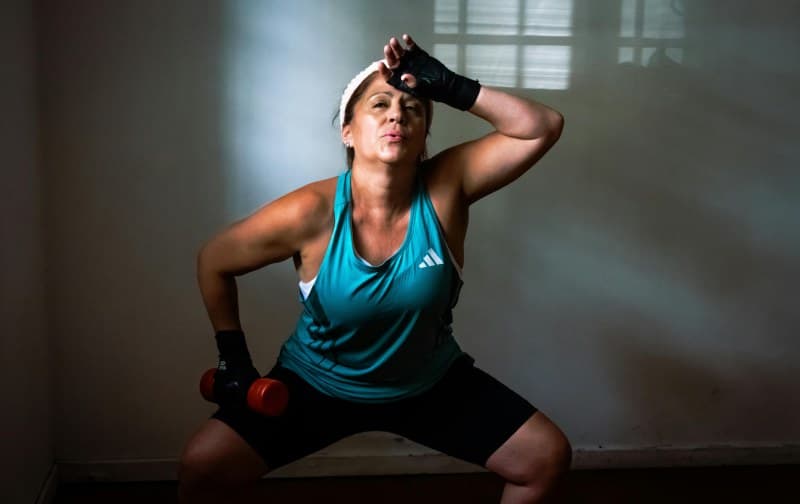
My friend Lisa avoided the gym for years because she thought she needed to lift 50-pound dumbbells to see any muscle growth. She’d watch people grunting under heavy bars and feel intimidated, so she stuck to cardio. But when she finally tried 10-pound weights for 15 reps until her arms burned, she noticed her biceps started to tone up in a month. That’s when we realized: the myth of “heavy weights only” is keeping a lot of casual fitness lovers from reaching their goals.
The Truth About Heavy Weights and Muscle Growth
Muscle growth (called hypertrophy) happens when your muscles are put under enough tension to cause tiny tears—then they repair and grow stronger. You don’t need to lift the heaviest weight in the room to do this. Light weights, when done for enough reps until fatigue (like 12-15 reps), can create the same tension as heavy weights. It’s all about volume (total reps × weight) and consistency, not just how much you lift.
5 Common Strength Training Myths Debunked
Myth 1: Heavy weights = bigger muscles
Not necessarily. A 2019 study in the Journal of Strength and Conditioning Research found that both light and heavy weights lead to similar muscle growth when volume is equal. So if you do 3 sets of 15 reps with 10 lbs or 3 sets of 8 reps with 20 lbs, you’ll get comparable results—if you push to fatigue.
Myth 2: You need to work out every day to build muscle
Muscles grow when you rest, not when you work out. When you lift, you damage muscle fibers; during rest, your body repairs them. Skipping rest days can lead to overtraining, which slows growth and increases injury risk. Aim for 2-3 strength training days a week, with rest days in between.
Myth3: Bodyweight exercises can’t build muscle
Bodyweight moves like push-ups, squats, and lunges are great for building muscle—especially for beginners. You can make them harder by adding reps, slowing down the movement, or using variations (like diamond push-ups or one-legged squats). Think about calisthenics athletes: they build impressive muscle using only their body weight.
Myth4: More reps = better results
It depends on your goal. If you want to build endurance, 15+ reps are great. For muscle growth, 8-15 reps work best. For strength (lifting heavier), 4-6 reps are ideal. Don’t just mindlessly do more reps—focus on form and fatigue.
Myth5: Spot reduction works (e.g., crunches for flat abs)
You can’t target fat loss in one area. Crunches build ab muscles, but you won’t see them until you lose overall body fat. Combine strength training with cardio and a balanced diet to reveal those muscles.
Light vs. Heavy Weight Training: A Quick Comparison
Wondering which is right for you? Here’s a breakdown:
| Factor | Light Weights (12+ reps) | Heavy Weights (6-8 reps) |
|---|---|---|
| Muscle Growth Type | Endurance-focused hypertrophy | Strength-focused hypertrophy |
| Fatigue Level | Slow, steady burn | Quick, intense fatigue |
| Accessibility | Easier to do at home (light dumbbells or bodyweight) | May require gym equipment (heavy dumbbells, barbells) |
| Risk of Injury | Lower (less strain on joints) | Higher (requires proper form to avoid injury) |
| Time per Set | Longer (more reps) | Shorter (fewer reps) |
Wisdom to Remember
“We are what we repeatedly do. Excellence, then, is not an act, but a habit.” — Aristotle
This quote applies perfectly to strength training. Whether you lift light or heavy, consistency is key. Lisa’s success came from showing up every week, not from lifting heavy weights.
FAQ: Your Common Questions Answered
Q: Can I build muscle with just bodyweight exercises?
A: Yes! As long as you push your muscles to fatigue. For example, if push-ups become easy, try elevating your feet or doing one-handed push-ups to increase tension.
Final Thoughts
You don’t need to lift heavy to build muscle. The best workout is the one you’ll stick to—whether that’s light weights at home or bodyweight moves in the park. Focus on form, consistency, and listening to your body. And remember: progress, not perfection, is the goal.