Last month, my friend Mia told me she was scared to start strength training. “I don’t want to lift heavy weights,” she said. “I just want to tone up, not get bulky.” Sound familiar? A lot of people avoid strength training because of myths about heavy weights being the only way to build muscle. Let’s set the record straight.
The Truth About Lifting Heavy
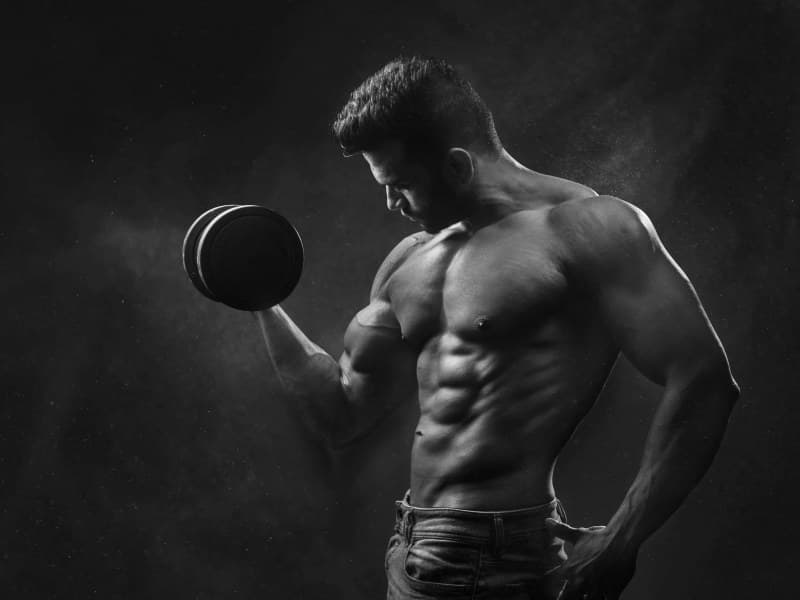
Muscle growth (called hypertrophy) happens when your muscle fibers are stressed enough to adapt and grow stronger. This stress doesn’t have to come from lifting the heaviest weights in the gym. It can come from lighter weights done with proper form until you feel fatigued, or even bodyweight exercises like push-ups or squats. The key is progressive overload—gradually making your workouts a little harder over time, whether by adding weight, reps, or slowing down movements.
4 Common Strength Training Myths Debunked
Myth 1: Heavy Weights = Bigger Muscles
Myth: You need to lift weights so heavy you can only do 3-5 reps to build muscle. Truth: While heavy weights are effective, lighter weights (12-15 reps until fatigue) also trigger muscle growth. A 2019 study in the Journal of Strength and Conditioning Research found that both light and heavy weights lead to similar muscle gains when done to the point of fatigue.
Myth 2: You Have to Train to Failure Every Time
Myth: You must push your muscles until you can’t do another rep to see results. Truth: Training to failure every session can lead to burnout, injury, and slower recovery. Most experts recommend training to failure only 1-2 times per week for each muscle group. Consistency beats intensity every time.
Myth 3: Machines Are Worse Than Free Weights
Myth: Free weights (like dumbbells) are the only way to build functional strength. Truth: Machines are great for beginners (they guide your movement to avoid injury) and for targeting specific muscles (like the leg press for quads). Both have their place in a well-rounded routine.
Myth 4: More Reps = Better Endurance, Less Muscle
Myth: High reps (20+) only build endurance, not muscle. Truth: High reps can still build muscle if you maintain proper form and tension. For example, doing 20 squats with good form will work your glutes and quads just as effectively as 10 heavy squats—you just need to push until you feel that burn.
Free Weights vs. Resistance Machines: A Quick Comparison
Not sure which to choose? Here’s how they stack up:
| Aspect | Free Weights | Resistance Machines |
|---|---|---|
| Muscle Activation | Engages stabilizer muscles (full-body) | Targets specific muscles (less stabilizer work) |
| Safety | Higher risk of injury (requires proper form) | Lower risk (guided movement) |
| Accessibility | Needs space and equipment (can be done at home) | Often found in gyms (less accessible at home) |
| Progressive Overload | Easy to add small increments of weight | Fixed weight increments (may jump too high) |
A Classic Quote to Keep You Going
“We are what we repeatedly do. Excellence, then, is not an act but a habit.” — Aristotle
This quote sums up strength training perfectly. You don’t need to lift heavy once a month—you need to show up consistently, even with light weights, to see results. Mia learned this firsthand.
Mia’s Story: Building Muscle Without Heavy Weights
Mia started with 5lb dumbbells, doing 15 reps of bicep curls, shoulder presses, and tricep extensions 3x a week. She focused on slow, controlled movements (taking 2 seconds to lift and 3 seconds to lower). After 2 months, she noticed her arms were firmer, and she could carry her 10lb grocery bags without getting tired. “I didn’t need to lift heavy,” she said. “I just needed to be consistent.”
FAQ: Can I Build Muscle at Home Without Equipment?
Q: I don’t have any weights at home—can I still build muscle?
A: Yes! Bodyweight exercises like push-ups, squats, lunges, planks, and glute bridges are excellent for building muscle. To make them harder, try slowing down the movements (e.g., 3 seconds to lower into a push-up), adding reps, or doing variations (like diamond push-ups for triceps). You can also use household items like water bottles or canned goods as makeshift weights.
At the end of the day, the best strength training routine is the one you enjoy and can stick to. Whether you lift heavy, light, or use your own body weight—consistency is key. So grab those dumbbells (or just your body) and get moving!