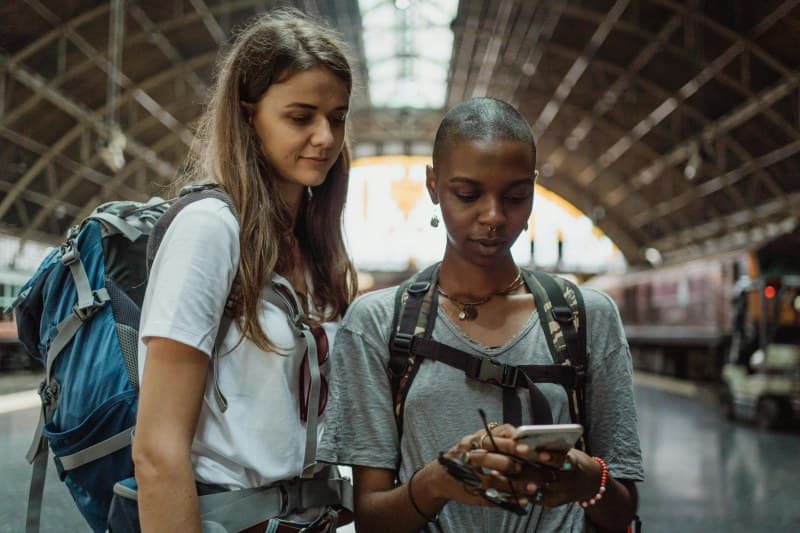
Let’s start with a story: Sarah, a first-time traveler to Kyoto, spoke zero Japanese. She worried she’d starve, get lost, or offend locals. But she downloaded an offline translation app, memorized three phrases (“hello,” “thank you,” “excuse me”), and packed a phrasebook. By the end of her trip, she’d eaten at a family-run ramen shop (pointed at a picture on the menu), made a friend at a cherry blossom festival (used gestures and a translation app to talk about flowers), and even navigated the subway using signs. Her takeaway? Language barriers aren’t as scary as they seem.
The truth about language and travel
You don’t need to be fluent in the local language to have a meaningful trip. What matters most is curiosity and respect. Even small efforts—like learning a few polite phrases—can open doors. Locals often appreciate the attempt more than perfect grammar.
5 common travel language myths debunked
Myth 1: You can’t order food without speaking the local language
False. Many restaurants in tourist areas have picture menus or English translations. If not, point at what others are eating or use a translation app to show the server what you want. Sarah’s ramen shop experience is proof—she pointed at a photo and got exactly what she wanted.
Myth 2: Locals get annoyed if you don’t speak their language
False. Most locals are happy to help. A study by the World Travel & Tourism Council found that 80% of travelers report positive interactions with locals even when they don’t share a language. The key is to smile and be polite.
Myth 3: Translation apps are useless
False. Apps like Google Translate and iTranslate work offline (if you download the language pack) and can handle basic conversations. They’re not perfect, but they’re a great tool. Just remember to double-check for context—some phrases might translate literally but not make sense.
Myth 4: You can’t make friends without speaking the local language
False. Shared experiences—like watching a festival, hiking a trail, or drinking coffee—can bridge language gaps. Gestures, facial expressions, and even laughter are universal. Sarah’s cherry blossom friend? They communicated using a mix of gestures and the translation app, and exchanged social media handles to stay in touch.
Myth 5: Sign language isn’t enough
False. Basic signs (like pointing to your stomach for hungry, or holding up a water bottle for water) work in most places. Even if you don’t know formal sign language, simple gestures can get your message across.
Which language tool should you use?
Here’s a quick comparison of common language tools for travelers:
| Tool | Pros | Cons | Best For |
|---|---|---|---|
| Translation App | Offline access, instant translations, voice input | Can be slow, may have errors | Basic conversations, ordering food |
| Phrasebook | No battery needed, accurate phrases | Hard to find specific phrases quickly | Polite greetings, emergency situations |
| Body Language | Universal, no tools needed | Can be misinterpreted | Simple requests, making connections |
A classic quote to remember
“The limits of my language mean the limits of my world.” — Ludwig Wittgenstein
While this quote is true in many ways, travel shows us that even small steps beyond our language limits can expand our world. A few phrases or a smile can turn a stranger into a friend, or a confusing menu into a delicious meal.
FAQ: Your burning question answered
Q: What’s the most important thing to do before traveling to a place with a different language?
A: Learn 5-10 basic phrases: hello, thank you, please, excuse me, and where is the bathroom? These phrases show respect and can help you in most situations. Also, download the offline language pack for your translation app—you don’t want to be stuck without service.
Final thoughts
Don’t let language hold you back from traveling. The world is full of people who are willing to connect, even if you don’t speak the same language. Pack a positive attitude, a few phrases, and a translation app—you’ll be surprised at how far you can go.