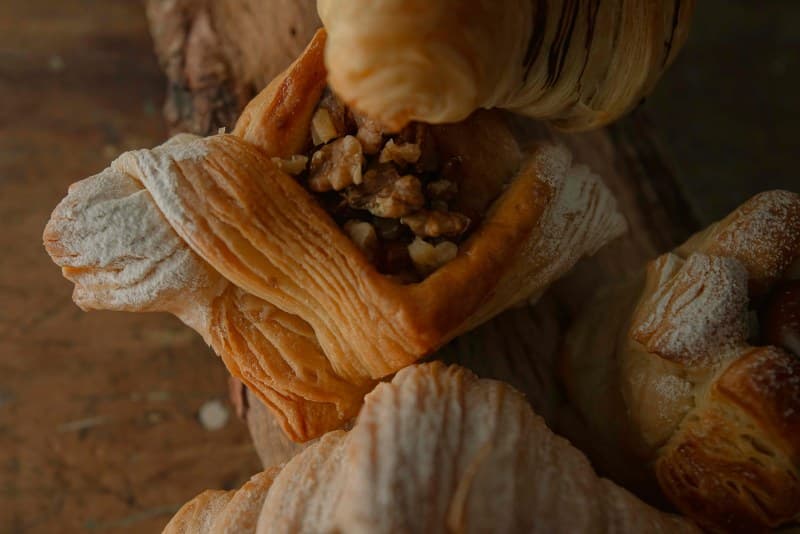
Last weekend, I tried to make an apple pie for my family. I followed every 'rule' I’d heard: ice-cold butter, heavy flour on the rolling pin, no overworking the dough. But the crust turned out tough and dry—nothing like the flaky layers I wanted. Turns out, I’d fallen for a few common pastry myths. Let’s set the record straight.
The Big Butter Myth: Is It Really the Only Flaky Secret?
Butter is often hailed as the king of pastry fats, and for good reason—it adds rich flavor and creates those iconic flaky layers. But is it the only way? Not at all. Shortening and lard are also great options, each with their own perks. Let’s compare:
| Fat Type | Flakiness | Flavor | Melting Point | Ease of Use |
|---|---|---|---|---|
| Butter | High (layers from water evaporation) | Rich, creamy | Low (melts quickly) | Tricky (needs cool temp) |
| Shortening | Very high (no water, layers stay intact) | Neutral | High (stable at room temp) | Easy (no melting issues) |
| Lard | Extremely high (rendered fat creates light layers) | Mild, savory | Medium | Moderate (needs cool storage) |
7 Pastry Myths You Need to Stop Believing 🥐
- Myth: Ice-cold butter is non-negotiable. Truth: Butter that’s too cold (straight from the freezer) has ice crystals that can tear the dough. Aim for cool butter—about 60°F (15°C)—so it’s still firm but malleable.
- Myth: Overworking the dough is the only way to get a tough crust. Truth: Underworking the dough can also lead to a crumbly, uneven crust. Mix just enough to combine ingredients—stop when the dough starts to come together.
- Myth: You can’t make pastry ahead of time. Truth: Pastry dough freezes beautifully! Wrap tightly in plastic and freeze for up to 3 months. Thaw in the fridge overnight before using.
- Myth: All pastry needs sugar. Truth: Savory pastries (like quiche or pot pie crusts) don’t require sugar. Adding sugar to sweet pastries helps with browning, but it’s not a must for structure.
- Myth: Roll the dough with lots of flour to prevent sticking. Truth: Too much flour dries out the crust. Lightly flour the surface and rolling pin, and rotate the dough as you roll.
- Myth: Blind baking is only for sweet pies. Truth: Blind baking (pre-baking without filling) is essential for savory dishes like quiche—it prevents sogginess from wet fillings.
- Myth: Margarine is a good butter substitute. Truth: Most margarines have added water/emulsifiers, making crusts dense. Use high-fat plant-based butter (80%+ fat) if substituting.
A Classic Tip to Keep in Mind 💡
“The only real stumbling block is fear of failure. In cooking, you've got to have a what-the-hell attitude.” — Julia Child
This quote sums up pastry making perfectly. Don’t let myths hold you back from experimenting. Even if your first crust isn’t perfect, you’ll learn something new for next time.
FAQ: Your Pastry Questions Answered
Q: Can I use plant-based butter for flaky pastry?
A: Yes! Look for options with at least 80% fat. Avoid those with added water or oils—they ruin texture.
Q: How long should I rest the pastry dough?
A: Rest for 30 minutes in the fridge to relax gluten, making it easier to roll and preventing shrinkage.
Final Tips for Perfect Pastry
- Keep all ingredients (butter, water) cool—warm ingredients lead to flat crusts.
- Use a light touch when mixing and rolling.
- For blind baking, line with parchment and fill with pie weights (or dried beans) to prevent puffing.
With these tips, you’ll be making flaky, delicious pastries in no time. Don’t forget to have fun and experiment—after all, cooking is all about trial and error!