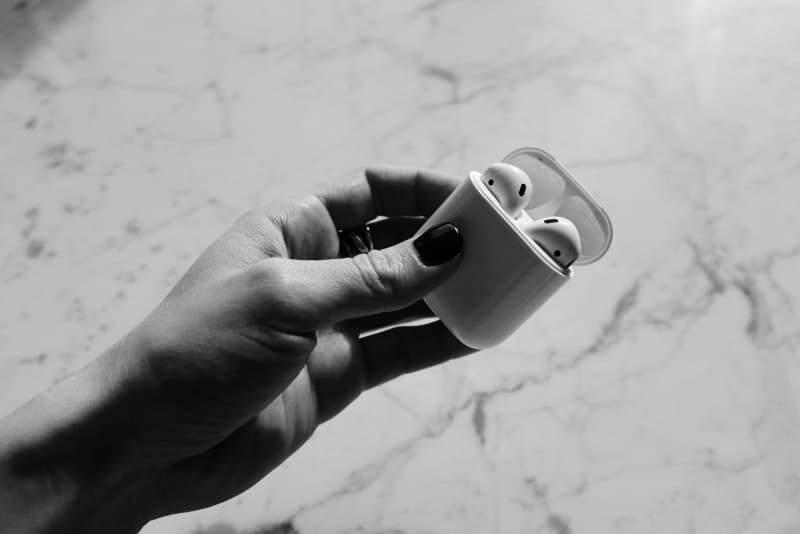
Sarah’s morning commute used to be a nightmare. The subway’s rumble, chatty passengers, and blaring music from nearby phones made it impossible to review her work notes. Then she got AirPods Pro with noise cancellation. Suddenly, the chaos faded into a quiet hum—she could focus on her notes without raising her voice in her head. But how does this magic work? And what myths about it should you ignore?
How AirPods Noise Cancellation Actually Works
AirPods use active noise cancellation (ANC) to block external sounds. Here’s the simple version: Two sets of mics pick up noise—one outside the earbud (to catch environmental sounds like traffic) and one inside (to check if any noise is still getting through). The AirPods then generate an inverse sound wave (a wave that’s the opposite of the noise) to cancel it out. It’s like adding a negative number to a positive to get zero—sound-wise.
ANC vs Transparency vs Off: Which Mode to Use When?
Not sure when to switch modes? Here’s a quick breakdown:
| Mode | What It Does | Best For | Pros | Cons |
|---|---|---|---|---|
| ANC | Blocks most low-frequency noise | Commuting, studying, noisy environments | Reduces distractions, improves focus | Uses slightly more battery |
| Transparency | Amplifies external sounds | Walking, crossing streets, talking to others | Stays aware of surroundings | Doesn’t block loud noise |
| Off | No noise cancellation | Quiet spaces, saving battery | Longest battery life | All external noise comes through |
5 Common Myths About AirPods Noise Cancellation Debunked
Myth 1: ANC blocks all sound
Truth: It’s great for constant, low-frequency noise (like subway rumble or airplane engines) but less effective for sudden, high-pitched sounds (like a baby crying or a car horn). ANC isn’t a soundproof barrier—it’s a noise reducer.
Myth 2: Higher volume = better ANC
Truth: Volume and ANC are separate. You don’t need to crank up your music to block noise. In fact, lower volume is better for your hearing when using ANC.
Myth3: ANC damages hearing
Truth: ANC itself doesn’t damage hearing. But if you use high volume with ANC, you’re more likely to harm your ears (since you can’t hear how loud it is). Keep volume at a safe level.
Myth4: Transparency mode is just turning ANC off
Truth: Transparency mode amplifies external sounds so you can hear what’s happening around you. It’s not the same as turning ANC off—you’ll get clearer, louder ambient noise.
Myth5: All AirPods models have the same ANC quality
Truth: Only AirPods Pro and AirPods Max have active noise cancellation. Regular AirPods and AirPods 2 don’t have this feature.
Practical Tips to Get the Most Out of ANC
- 🔧 Ensure a tight fit: ANC works best when the earbud seals your ear. Try different ear tips to find the right one.
- 🔄 Update firmware: Apple often releases updates to improve ANC performance. Check your settings for updates.
- 🎚️ Adjust volume: Lower volume when using ANC—you don’t need to crank it up to block noise.
Classic Wisdom on Focus & Noise
“Concentration is the secret of strength.” — Ralph Waldo Emerson
This quote rings true for anyone who uses ANC to focus. By cutting out distractions, you can channel your energy into what matters—whether it’s work, study, or just enjoying a quiet moment. Sarah’s experience is a perfect example: after switching to ANC, she finished her commute notes in half the time and even used it at her busy café job to stay focused.
FAQ: Does Using ANC Drain AirPods Battery Faster?
Q: I’ve heard that using ANC shortens my AirPods’ battery life. Is that true?
A: Yes, but the difference is minimal. AirPods Pro last about 4.5 hours with ANC on vs 5 hours without. If you use the charging case, you still get up to 24 hours of total use—so it’s a small trade-off for the peace and quiet.
AirPods noise cancellation is a game-changer for anyone who needs to focus or find calm in a noisy world. By understanding how it works, debunking myths, and using it wisely, you can get the most out of this feature. Whether you’re commuting, studying, or just want a break from the chaos, ANC has your back.