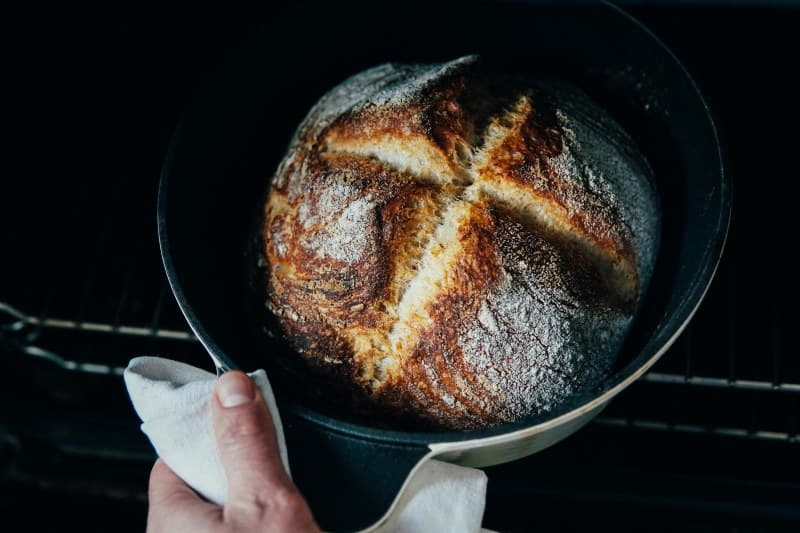
Last year, I spent three weeks trying to get my sourdough starter to come alive. I followed every online tutorial, but it just sat there—sad, flat, and unbubbly. Then a baker friend pointed out I was keeping it in a cold corner of the kitchen. Once I moved it to a warm spot, it bubbled up like a happy cauldron. That’s when I realized sourdough success isn’t just about following steps—it’s about understanding the key factors that make those tiny yeast and bacteria thrive.
7 Key Factors for a Healthy Sourdough Starter 🍞
These factors are the backbone of a lively starter. Let’s break them down with a quick comparison of ideal practices vs. common mistakes:
| Factor | Ideal Practice | Common Mistake |
|---|---|---|
| Flour Type | Whole grain (rye or wheat) for initial growth; mix with white later | Using only refined white flour (lacks nutrients for microbes) |
| Water Quality | Filtered or spring water (no chlorine) | Tap water with high chlorine (kills yeast/bacteria) |
| Temperature | 70–75°F (21–24°C) for active fermentation | Too cold (slows growth) or too hot (kills microbes) |
| Feeding Ratio | 1:1:1 (starter:flour:water by weight) | Irregular ratios (e.g., too much water dilutes microbes) |
| Feeding Frequency | Every 12–24 hours (warm temp) or 3–4 days (refrigerated) | Overfeeding (wastes flour) or underfeeding (starves microbes) |
| Aeration | Stir vigorously to add oxygen | Not stirring (traps CO2, slows growth) |
| Storage | Glass jar with loose lid (allows gas escape) | Sealed airtight jar (can explode from pressure) |
Common Sourdough Starter Myths Debunked
Let’s clear up some misinformation that trips up beginners:
- Myth: You need special “sourdough starter flour”
Truth: Any whole grain flour works—rye is especially good for kickstarting growth because it has more nutrients for microbes. - Myth: Starter must be fed every 12 hours
Truth: If your kitchen is cool (60°F/15°C), feeding every 24 hours is enough. Refrigerated starters only need feeding every 3–4 days. - Myth: A bubbly starter is always ready to use
Truth: It needs to double in size within 4–6 hours after feeding to be active enough for baking.
“The only real stumbling block is fear of failure. In cooking, you’ve got to have a what-the-hell attitude.” — Julia Child
This quote rings true for sourdough. I’ve thrown out my share of failed starters, but each mistake taught me something. Take my neighbor Lisa: she used tap water with high chlorine, which killed her starter’s yeast. Switching to filtered water made all the difference—her starter doubled in size in 8 hours, and she baked her first loaf the next day.
Troubleshooting Your Starter: FAQ
Q: My starter has a dark liquid (hooch) on top—should I throw it away?
A: No! Hooch is a natural byproduct of fermentation (alcohol from yeast). Just pour it off (or stir it in if you like a tangier flavor) and feed your starter as usual. It’s a sign your starter is hungry, not bad.
Final Thoughts
Sourdough starter is a living thing—treat it with patience and attention, and it will reward you with delicious, crusty loaves. Don’t get discouraged if it takes a few tries; even professional bakers had their share of flat starters. Keep experimenting, and soon you’ll have a starter that’s as unique as you are.