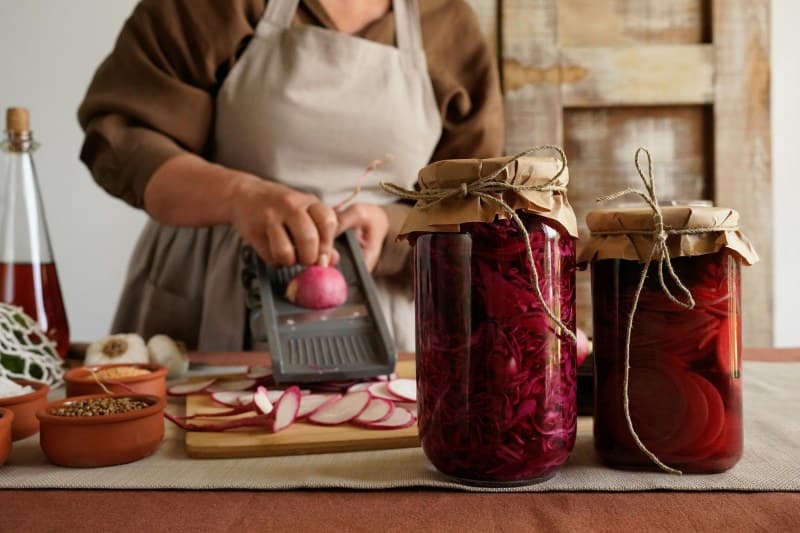
Last month, my friend Maria proudly started her first batch of sauerkraut. Three days later, she texted me panicking: “It’s bubbling! Is it rotten?” She dumped the whole jar, but little did she know those bubbles were a sign of success. Fermentation is full of such misconceptions, so let’s break it down.
What Is Home Fermentation, Anyway?
At its core, home fermentation uses beneficial bacteria (like lactobacillus) to break down sugars in veggies into lactic acid. This preserves the food, boosts its probiotic content, and adds that tangy, umami flavor we love in sauerkraut or kimchi. It’s an ancient technique—humans have been fermenting food for thousands of years to keep it fresh without refrigeration.
7 Common Fermentation Myths (And The Truth)
Let’s clear up the most persistent myths about home fermentation with this quick comparison:
| Myth | Truth |
|---|---|
| Bubbles mean the ferment is spoiled. | Bubbles are CO2 from bacteria—they’re a sign your ferment is working! |
| You need fancy equipment to ferment. | A regular mason jar with a weight (like a smaller jar filled with water) works perfectly. |
| Fermented veggies must taste sour to be good. | Taste varies—sauerkraut can be mild (1 week) or tangy (4+ weeks), depending on your preference. |
| Mold means you have to throw it out. | White, fuzzy mold on the surface is usually harmless—scrape it off, check the veggies below (if they’re submerged and smell okay, keep going). |
| You need to add a starter culture. | Vegetables have natural bacteria—no starter needed (though you can use one for faster results). |
| Fermentation is unsafe. | As long as veggies stay submerged (to prevent bad bacteria), fermented food is safe to eat. |
| You can only ferment cabbage. | Almost any veggie works—carrots, cucumbers, radishes, and even peppers are great for fermenting. |
Step-by-Step: Make Your First Sauerkraut Batch
Ready to try it yourself? Here’s a simple sauerkraut recipe:
- Shred 1 head of green cabbage (remove the core).
- Add 1-2% of the cabbage’s weight in salt (e.g., 1 tbsp salt for 1 pound of cabbage).
- Massage the cabbage with your hands for 5-10 minutes until it releases enough juice to cover itself.
- Pack the cabbage tightly into a mason jar, pressing down to remove air bubbles.
- Place a weight (like a smaller jar filled with water) on top to keep the cabbage submerged.
- Seal the jar loosely (to let CO2 escape) and let it ferment in a cool, dark place (60-70°F).
- Check it every few days—taste it after 1 week (mild) or 4 weeks (tangy). Once it’s ready, store it in the fridge.
Flavor Hacks to Elevate Your Ferments
Want to mix things up? Try these add-ins for extra flavor:
- Caraway seeds or dill for classic sauerkraut.
- Garlic and ginger for a zesty kick.
- Chili flakes or gochujang (Korean chili paste) to make kimchi.
- Apple slices for a slightly sweet ferment.
Quote to Remember
“Fermentation is a way of preserving food that also enhances its nutritional value and flavor. It’s a dialogue between microbes and ingredients.” — Sandor Katz, author of Wild Fermentation
Katz’s words remind us that fermentation isn’t just a technique—it’s a collaboration with nature. Those “imperfect” bubbles and tangy tastes are part of the magic.
FAQ: Do I Need a Special Jar for Fermentation?
Q: I don’t have a fancy fermentation jar—can I use a regular mason jar?
A: Absolutely! A standard mason jar works great. Just make sure to use a weight to keep the veggies submerged (to prevent mold). You can leave the lid slightly loose to let CO2 escape, or use an airlock lid if you have one (but it’s not necessary). The key is keeping the veggies under the brine.