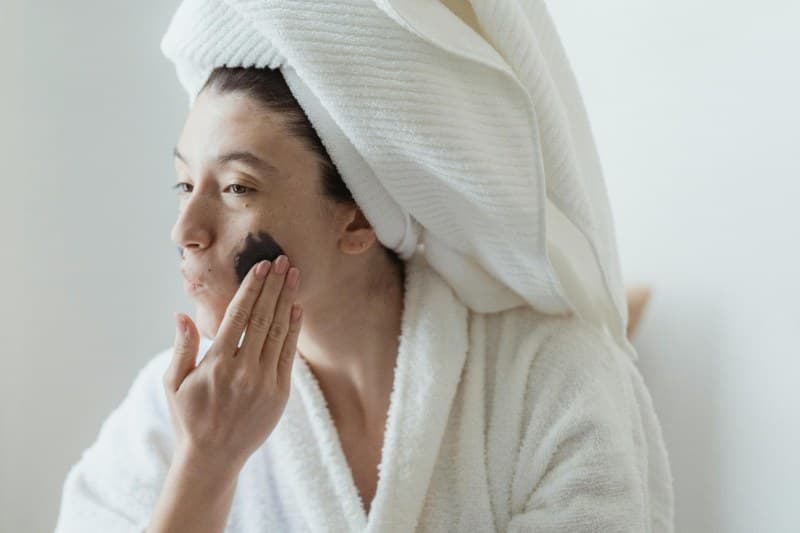
Last month, my friend Lila came to me panicking—her cheeks were red, tight, and dotted with tiny bumps. She’d been using a gritty scrub twice a day, convinced it would banish her dullness and acne. Turns out, she’d fallen for one of the most common exfoliation myths. Exfoliation is a skincare staple, but there’s so much misinformation floating around. Let’s break down 6 key myths and get to the truth.
6 Exfoliation Myths Debunked ✨
- Myth 1: Exfoliate every day for maximum glow
The truth? Over-exfoliation strips your skin’s natural barrier, leading to irritation, dryness, or breakouts. Most skin types only need 1-3 times a week.
- Myth 2: Physical exfoliants are better for deep cleaning
Physical scrubs (like sugar or walnut shells) can cause micro-tears in the skin if used too hard. Chemical exfoliants (AHAs/BHAs) dissolve dead skin cells without scrubbing, which is gentler for most people.
- Myth 3: All chemical exfoliants are harsh
Not true! Lactic acid (a gentle AHA) is great for sensitive skin, while salicylic acid (BHA) works well for oily/acne-prone skin. Always start with a low concentration (1-2% for beginners).
- Myth 4: Exfoliation can fix all acne
Exfoliation helps unclog pores, but it won’t cure cystic acne (which forms deep under the skin). For persistent cystic acne, consulting a skincare professional is a good idea.
- Myth 5: Sensitive skin shouldn’t exfoliate
Sensitive skin can benefit from gentle exfoliation—just pick the right product. Try a low-concentration lactic acid or enzyme exfoliant once a week to avoid irritation.
- Myth 6: More scrubbing = better results
Scrubbing too hard can damage your skin’s barrier. Use light, circular motions (for physical scrubs) or let chemical exfoliants sit for 1-2 minutes before rinsing.
Chemical vs. Physical Exfoliants: Which Is Right for You?
Confused about which type to choose? Here’s a quick comparison:
| Type | How It Works | Best For | Pros | Cons |
|---|---|---|---|---|
| Chemical | Dissolves dead skin cells using acids (AHAs/BHAs) or enzymes | Oily, acne-prone, sensitive skin | Gentle, no micro-tears, penetrates pores deeply | May cause slight tingling; requires sun protection afterward |
| Physical | Scrubs away dead skin with particles (sugar, jojoba beads) | Normal, combination skin | Immediate smoothness, easy to use | Risk of micro-tears if overused; not ideal for sensitive skin |
Wisdom to Remember
Less is more.
This simple proverb applies perfectly to exfoliation. You don’t need to slather on products or scrub hard to get results. A little goes a long way in keeping your skin healthy and glowing.
Common Q&A
Q: I have dry skin—can I still exfoliate?
A: Yes! Opt for a hydrating chemical exfoliant like lactic acid, which not only removes dead skin but also adds moisture. Exfoliate once a week to avoid drying out your skin further.
Practical Tips for Your Routine
- Always follow exfoliation with a rich moisturizer to lock in hydration.
- Apply sunscreen daily—exfoliated skin is more vulnerable to sun damage.
- Patch test new exfoliants on your inner arm before applying to your face to check for reactions.
Exfoliation doesn’t have to be complicated. By ditching these myths and choosing the right product for your skin type, you can achieve that healthy, radiant glow without irritation. Remember: listen to your skin—it will always tell you what it needs.