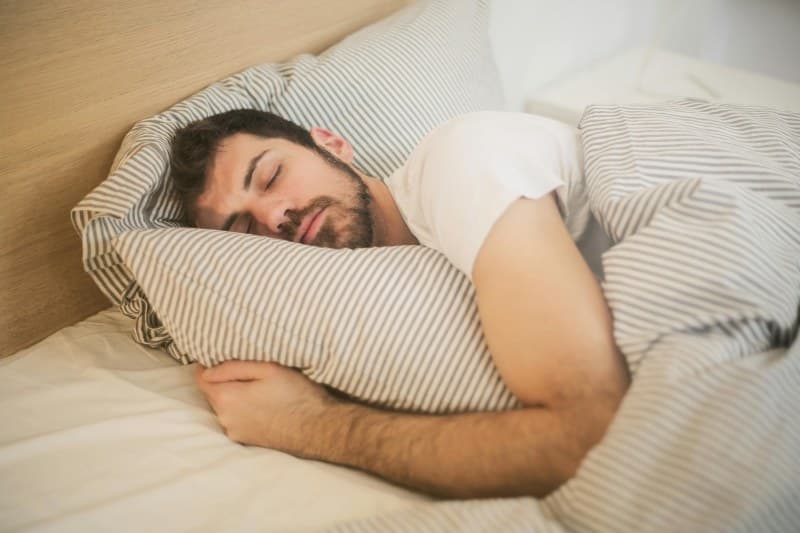
Let’s start with a story: My friend Sarah used to lie awake at 2 a.m., panicking because she’d only slept 6 hours. She’d heard her whole life that 8 hours was non-negotiable, so every minute under that felt like a failure. This stress made it even harder to fall back asleep—creating a vicious cycle. Sound familiar? Many of us cling to sleep myths that do more harm than good. Let’s break down four of the most persistent ones.
The 4 Sleep Myths Holding You Back
Myth 1: You Must Get 8 Hours of Sleep Every Night
We’ve all heard this rule, but it’s not one-size-fits-all. Research from the National Sleep Foundation shows that adults need 7-9 hours, but individual needs vary. Some people thrive on 7 hours; others need 9. Obsessing over the 8-hour mark can lead to anxiety, which disrupts sleep further.
Myth 2: Snoring Is Harmless
Snoring might seem like a minor annoyance, but it can be a sign of obstructive sleep apnea (OSA)—a condition where breathing pauses during sleep. OSA reduces oxygen flow to the brain and increases risk of heart disease. If snoring is loud enough to wake others or you feel tired during the day, it’s worth checking with a healthcare provider.
Myth 3: Hitting Snooze Helps You Feel More Rested
That 10-minute snooze might feel like a gift, but it’s actually counterproductive. When you hit snooze, you go back into light sleep, which is easier to wake from but leaves you groggier (a phenomenon called sleep inertia). It’s better to set your alarm for the time you really need to wake up and get out of bed immediately.
Myth 4: Alcohol Helps You Sleep Better
Alcohol might make you drowsy, but it disrupts your sleep cycle. It suppresses REM sleep (the deep, restorative stage) and can cause frequent wake-ups during the night. You might fall asleep fast, but you won’t feel rested in the morning.
Myth vs. Truth vs. Fix: A Quick Guide
Here’s a side-by-side look at each myth, its truth, and simple fixes:
| Myth | Science-Backed Truth | Practical Fix |
|---|---|---|
| 8 hours is mandatory | Adults need 7-9 hours; individual needs vary | Track your sleep for a week to find your sweet spot |
| Snoring is harmless | Loud snoring may signal sleep apnea | Talk to a doctor if snoring disrupts sleep or causes daytime fatigue |
| Snooze button = more rest | Snoozing leads to sleep inertia | Set one alarm and place it across the room to force yourself up |
| Alcohol improves sleep | Alcohol suppresses REM sleep and causes nighttime wake-ups | Avoid alcohol 3-4 hours before bed |
Wisdom from the Past
“Early to bed and early to rise makes a man healthy, wealthy, and wise.” — Benjamin Franklin
While Franklin’s quote is a classic, it’s important to note that it’s not universal. Some people are natural night owls (thanks to their circadian rhythm), and forcing an early bedtime can backfire. The key is to find a sleep schedule that works for your body, not just a saying.
FAQ: A Common Sleep Question Answered
Q: Is it okay to nap during the day if I don’t get enough sleep at night?
A: Short naps (20-30 minutes) can help boost energy without disrupting nighttime sleep. Avoid long naps (over an hour) or napping after 3 p.m.—these can make it harder to fall asleep at night. If you’re napping regularly because you’re always tired, it might be a sign of an underlying sleep issue.
Final Thoughts
Sleep is personal, and there’s no one “right” way to do it. By letting go of these myths, you can stop stressing about sleep and start listening to your body. Remember: The goal isn’t to hit a number—it’s to wake up feeling rested and ready to take on the day. Sweet dreams! 😴