Last month, I spent 10 minutes rummaging through my tiny pantry looking for a can of chickpeas, only to find it buried under a bag of rice and a half-empty jar of peanut butter. Sound familiar? Small pantries are a common struggle, but you don’t need expensive organizers or a professional to fix the chaos. These 6 hacks are quick, budget-friendly, and use items you probably already have at home.
6 Clever Pantry Hacks for Small Spaces
1. Tension Rods for Vertical Storage 🪜
Vertical space is your best friend in a small pantry. Install a tension rod under a shelf to hang cleaning supplies (like spray bottles) or reusable grocery bags. This frees up shelf space for food items and keeps often-used tools within reach.
2. Mason Jars for Dry Goods 🥫
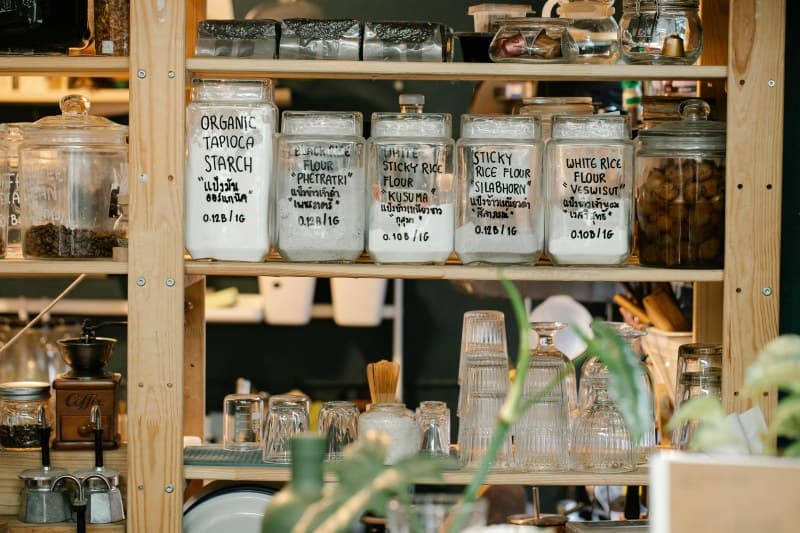
Repurpose old mason jars (or even glass jars from pasta sauce) to store dry goods like pasta, grains, and nuts. Not only do they keep food fresh longer, but they also stack neatly, saving space. Plus, you can easily see what’s inside without opening every bag.
3. DIY Labels for Clarity ✍️
You don’t need fancy vinyl labels. Grab some masking tape and a marker to label jars and bins. Write the item name and expiration date (if applicable) to avoid wasting food. This simple step makes it easy to find what you need in seconds.
4. Shelf Risers from Old Books 📚
Store-bought shelf risers can be pricey, but old books or sturdy cardboard boxes work just as well. Place them on a shelf to create an extra layer for smaller items like spices or canned goods. Just make sure the books are clean and sturdy enough to hold the weight.
5. Group Like Items Together 🗂️
Grouping similar items (snacks, baking supplies, canned goods) together makes your pantry more organized. Use repurposed cereal boxes or shoeboxes as bins to keep these groups contained. For example, all baking items (flour, sugar, baking powder) go in one bin, so you don’t have to search through the entire pantry when making cookies.
6. Rotate Items to Avoid Waste ♻️
When restocking your pantry, place new items at the back and older items at the front. This "first in, first out" method ensures you use older food before it expires. I started doing this after finding a jar of pickles that had been expired for 2 years—oops!
Store-Bought vs. DIY Pantry Tools: A Cost Comparison
You don’t need to spend a lot to organize your pantry. Here’s how DIY alternatives stack up against store-bought tools:
| Store-Bought Item | Cost Range | DIY Alternative | Cost |
|---|---|---|---|
| Shelf Riser | $15-$20 | Old Books/Cardboard Boxes | $0 |
| Pantry Labels | $10-$15 | Masking Tape + Marker | $1 (or less) |
| Plastic Storage Bins | $8-$12 each | Repurposed Cereal/Shoeboxes | $0 |
Wisdom for Organizing
"A place for everything, and everything in its place." — Benjamin Franklin
This classic quote sums up the heart of pantry organization. When every item has a designated spot, you save time, reduce stress, and avoid wasting food. It’s not about being perfect—it’s about making your pantry work for you.
FAQ: Common Pantry Organizing Questions
Q: I don’t have any extra jars or boxes—can I still organize my pantry?
A: Absolutely! Start with grouping like items together and labeling them with whatever you have (even a piece of paper). You can slowly collect jars and boxes over time as you use up products.
Q: How often should I re-organize my pantry?
A: A quick check every month (to rotate items and throw out expired food) is enough. A deeper clean and re-organization every 3-6 months will keep things in order.
Organizing a small pantry doesn’t have to be overwhelming. Try one hack this week, and see how much easier it is to find what you need. Your future self (and your chickpeas) will thank you!