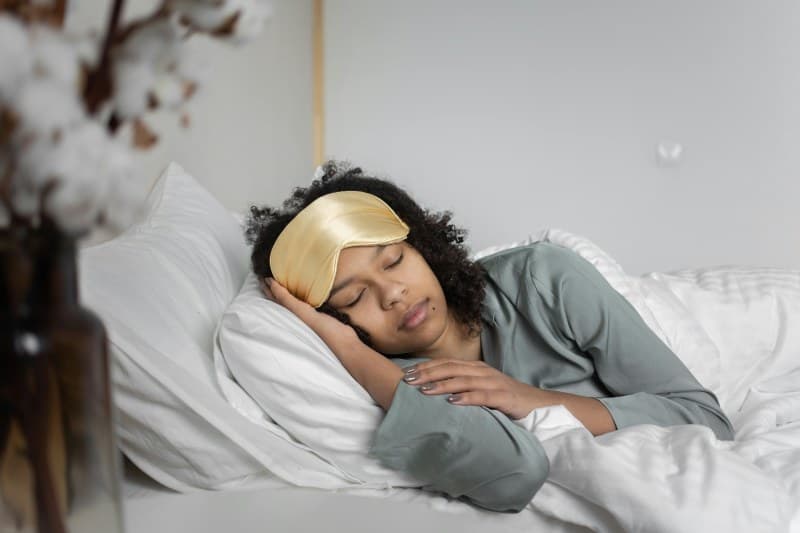
Let’s be real—we’ve all been there: Lila, a 32-year-old graphic designer, hits the hay at 11 PM after scrolling Instagram for 30 minutes. She’s in bed for 8 hours, but wakes up groggy, reaching for her coffee before her feet even touch the floor. What’s going on? It’s not just about how long she sleeps—it’s the small, surprising habits that are sabotaging her sleep quality.
The 4 Habits You Didn’t Know Were Ruining Your Sleep
1. Drinking “Herbal” Tea Too Late
You reach for a cup of tea to wind down, but not all herbal teas are caffeine-free. Green tea (even decaf has trace amounts) or yerba mate can keep you awake. Lila used to drink matcha tea an hour before bed—no wonder she tossed and turned!
Fix: Stick to chamomile, peppermint, or valerian root tea 2 hours before bed. These are naturally caffeine-free and promote relaxation.
2. Keeping Your Bedroom Too Warm
Your body needs to cool down to fall asleep. A room that’s too warm (above 67°F/19°C) disrupts this process. Lila kept her bedroom at 72°F—way too toasty for quality sleep.
Fix: Set your thermostat to 60-67°F (15-19°C). If you’re cold, use layers instead of cranking the heat.
3. Staring at a Bright Alarm Clock
That glowing digital clock on your nightstand emits blue light, which suppresses melatonin (the sleep hormone). Lila’s clock was right next to her face—she didn’t realize it was keeping her from deep sleep.
Fix: Use a dim red light clock (red light doesn’t affect melatonin) or turn it away from your bed.
4. Napping Longer Than 20 Minutes
Long naps (over 20 minutes) can make you feel groggy and disrupt your nighttime sleep. Lila took 45-minute naps after work—this threw off her circadian rhythm.
Fix: Keep naps to 10-20 minutes, or avoid napping after 3 PM.
Sleep Myths vs. Facts: A Quick Comparison
Let’s clear up some common misconceptions about sleep:
| Myth | Fact |
|---|---|
| More sleep = better sleep | Quality matters more than quantity. 7-9 hours of deep, uninterrupted sleep is ideal. |
| Weekend catch-up sleep fixes lost rest | Irregular sleep schedules disrupt your circadian rhythm—consistency is key. |
| Alcohol helps you fall asleep faster | Alcohol reduces deep sleep and causes frequent awakenings. |
| Counting sheep helps you fall asleep | Focusing on a monotonous task can work, but visualizing a calm scene is more effective. |
Wisdom From the Past
“Early to bed and early to rise makes a man healthy, wealthy, and wise.” — Benjamin Franklin
Franklin’s words ring true today. A consistent sleep schedule (even on weekends) helps regulate your body’s internal clock, leading to better sleep quality and overall wellness.
FAQ: Your Sleep Questions Answered
Q: Can I make up for lost sleep on weekends?
A: Unfortunately, no. While you might feel better temporarily, weekend catch-up sleep disrupts your circadian rhythm. It’s better to aim for a consistent bedtime and wake-up time every day.
Final Thoughts
Small changes can make a big difference in your sleep quality. Try adjusting one habit this week—like switching to chamomile tea or lowering your bedroom temperature—and see how you feel. Remember, sleep is not a luxury; it’s a necessity for your physical and mental health.